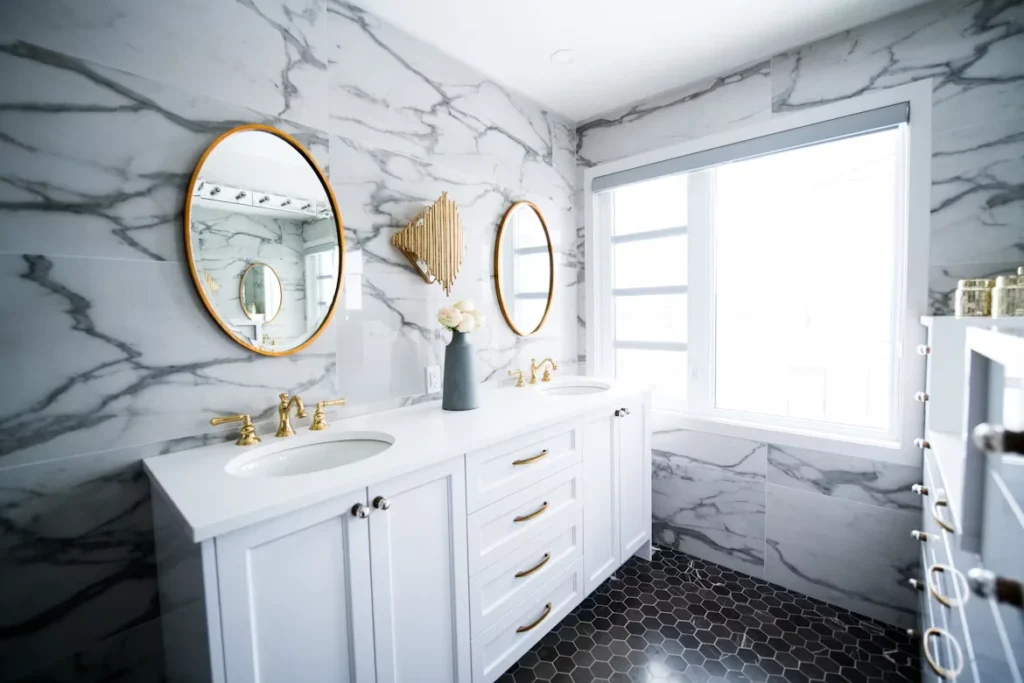
Shopping for bathroom vanities sounds simple until you actually start looking. Walk into any showroom or scroll through a few websites, and you will find dozens of shapes, finishes, and configurations all claiming to be the right fit for your space.
The truth is, most bathroom vanities look great in photos. The real test is how one performs in your specific bathroom, day after day. This guide walks through exactly what matters before you buy, so you end up with a vanity that fits your space and holds up over time.
What Is a Bathroom Vanity, Exactly?
A bathroom vanity is the cabinet and countertop unit that holds your sink, plumbing, and storage. It is usually the focal point of the bathroom, which is why it carries so much weight in how the whole room feels.
Vanities come in a wide range of formats floating units mounted to the wall, freestanding cabinets that sit on the floor, single sink setups, and double sink versions built for shared bathrooms. The material, size, and finish you choose shape both the look of the room and how easy it is to keep clean.
A good vanity does two jobs at once. It holds your everyday essentials, and it sets the tone for the entire bathroom.
Why Choosing the Right Bathroom Vanity Matters
Not every vanity is built for every bathroom, and getting this wrong is more common than you would think.
It affects daily function. A vanity with too little storage means clutter on the counter. One that is too tall or too short throws off the whole feel of the room every time you use it.
It impacts resale value. Bathrooms are one of the first things buyers notice. A dated or mismatched vanity can drag down how a whole bathroom is perceived, even if everything else is updated.
It has to handle moisture. Bathrooms are wet environments. The wrong material swells, warps, or peels within a few years long before you were planning to replace it.
It sets the design tone. The vanity is usually the largest single piece of furniture in the room. Whatever finish and style you pick becomes the anchor that everything else is built around.
Bathroom Vanity Styles to Consider
There is no single “best” vanity it depends on your bathroom layout, household size, and the look you are going for. Here are the main styles worth considering.
Floating Vanities
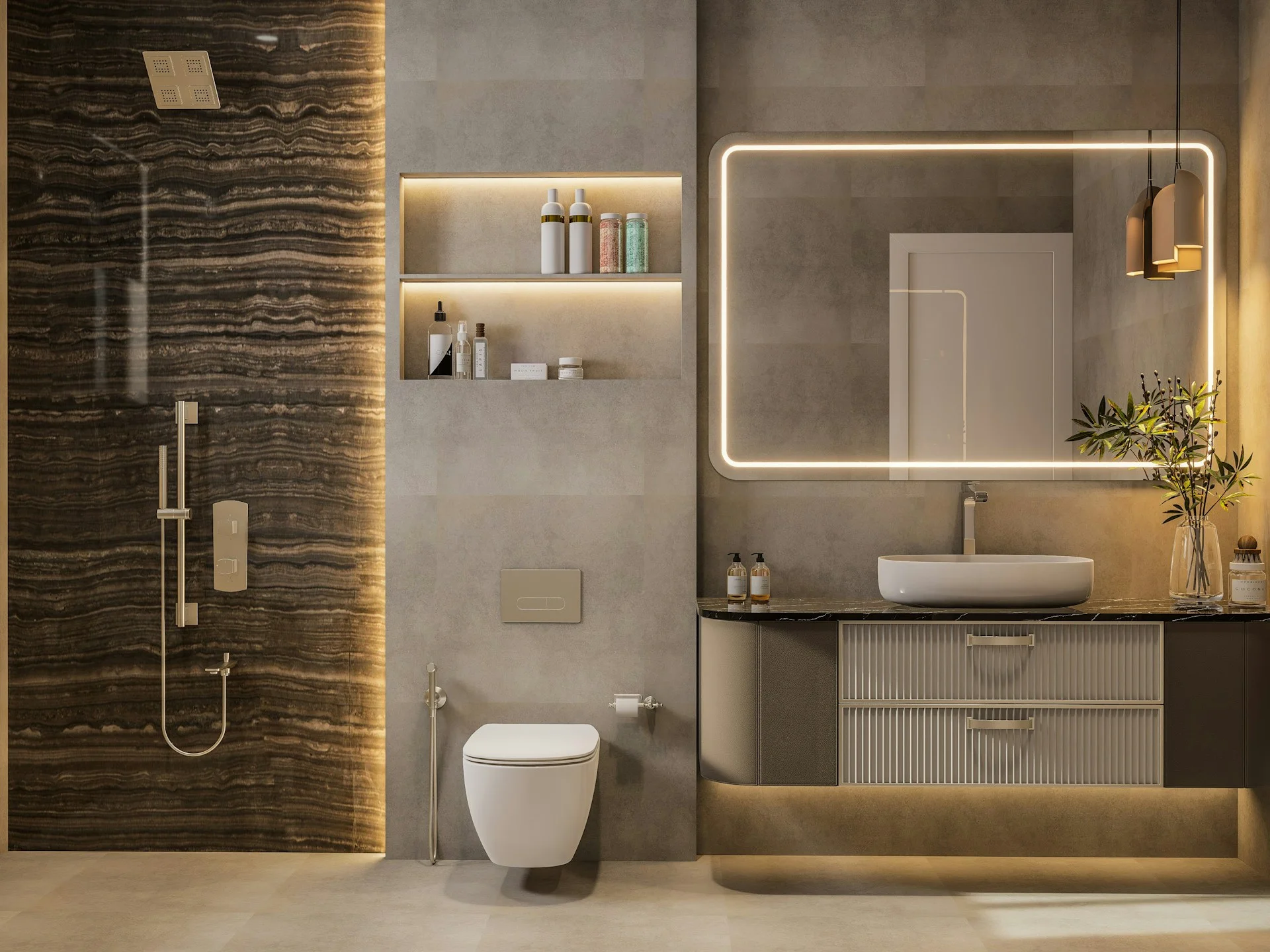
Floating vanities mount directly to the wall instead of sitting on the floor. This creates a clean, open look and makes the bathroom feel larger, especially in smaller spaces. Wood slat finishes and minimalist cabinet fronts are popular in this style right now.
They are a strong choice for modern and contemporary bathrooms where visual space matters, and they make floor cleaning noticeably easier since there is nothing blocking the floor underneath.
Double Sink Vanities
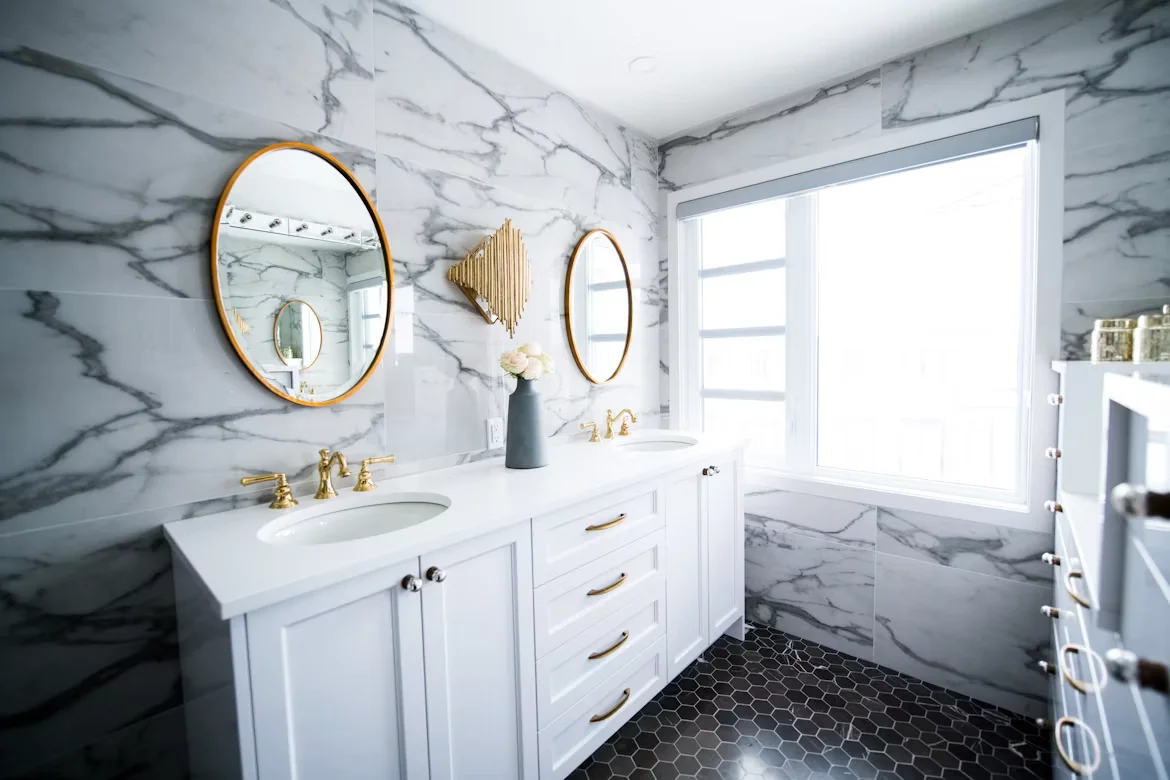
Double sink vanities give two people separate sink space, which is the main reason they show up so often in primary bathrooms and shared family bathrooms. They typically run wider, so you need to measure your space carefully before committing.
These work especially well with dark wood finishes or matte cabinetry, paired with a center storage tower between the two sinks for added function.
Single Sink Vanities
Single sink vanities are the standard choice for smaller bathrooms, powder rooms, and secondary bathrooms. They take up less floor space and usually cost less than double sink versions.
A single vanity with a bold mirror round, square, or oversized rectangular can still make a strong design statement even in a compact footprint.
Wood-Tone Vanities
Wood-tone vanities bring warmth into a bathroom that can otherwise feel cold and clinical. Walnut, oak, and other natural wood finishes pair well with white countertops and black or brass hardware.
This style works particularly well in farmhouse, transitional, and organic modern bathrooms where you want texture and natural character rather than a flat, painted look.
Shaker-Style Vanities
Shaker cabinetry recognizable by its simple, recessed panel doors remains one of the most versatile vanity styles available. It works in traditional bathrooms just as easily as it does in modern ones, which is part of why it has stayed popular for so long.
White and light gray shaker vanities are especially common because they brighten the room and pair with almost any wall color or tile choice.
How to Choose the Right Bathroom Vanity
Once you know which style direction you like, it is time to work through the practical details.
Step 1: Measure your space first. Measure the width, depth, and height available before you fall in love with any particular vanity. Account for door swing, drawer clearance, and any plumbing that is already in a fixed position.
Step 2: Decide between single and double sink. If more than one person uses the bathroom at the same time regularly, a double sink vanity saves a lot of morning frustration. If space or budget is limited, a single sink with good storage is usually the smarter call.
Step 3: Pick a material that handles moisture. Solid wood, plywood with a sealed finish, and moisture-resistant engineered wood all perform well in bathrooms. Avoid low-grade particleboard, which swells quickly when it gets wet.
Step 4: Match the finish to your overall bathroom design. Wood-tone vanities warm up a space. White and light shaker styles brighten it. Dark cabinetry adds a more dramatic, grounded feel. Think about your tile, wall color, and lighting before locking in a finish.
Step 5: Don’t overlook the countertop and hardware. Quartz and solid surface countertops resist staining and water damage better than laminate. Matte black, brushed brass, and satin nickel hardware are the most popular finishes for 2026 pick whichever complements your faucet and lighting fixtures.
Common Mistakes to Avoid When Buying Bathroom Vanities
1. Not accounting for plumbing rough-in. If your existing plumbing is fixed, your new vanity needs to accommodate it or you will be paying extra for a plumber to relocate pipes.
2. Choosing style over storage. A vanity that looks great but offers minimal drawer space becomes frustrating fast, especially in a shared bathroom.
3. Ignoring the material’s moisture resistance. Bathrooms are humid by nature. A vanity built from the wrong material will swell, warp, or develop mold issues within a few years.
4. Skipping the mirror and lighting pairing. The mirror and lighting above your vanity affect how the whole setup feels and functions. Choosing them as an afterthought often leads to a mismatched final look.
5. Underestimating installation requirements. Floating vanities, in particular, need solid wall anchoring to support the weight of the countertop and sink. Skipping proper installation can lead to issues down the line.
Frequently Asked Questions About Bathroom Vanities
What should I look for when buying bathroom vanities?
Focus on size, storage, material, and moisture resistance first. Style matters, but a vanity that does not fit your space or hold up to daily bathroom use will cause problems no matter how good it looks.
What is the standard size for bathroom vanities?
Standard single sink vanities typically range from 24 to 36 inches wide, while double sink vanities usually start around 60 inches. Depth is commonly 18 to 21 inches, though exact sizing varies by manufacturer.
Are floating bathroom vanities a good choice for small bathrooms?
Yes. Floating vanities create the appearance of more floor space and make a small bathroom feel larger, since there is no cabinet base blocking the floor.
What material is best for bathroom vanities?
Solid wood with a sealed finish, moisture-resistant engineered wood, and quality plywood all hold up well in humid bathroom environments. Avoid low-grade particleboard, which is prone to swelling.
How do I choose between a single sink and double sink vanity?
If two people regularly use the bathroom at the same time, a double sink vanity is worth the extra space and cost. For smaller bathrooms or secondary bathrooms, a single sink vanity is usually the more practical option.
Do bathroom vanities come with the countertop included?
This depends on the manufacturer and product. Some vanities are sold as complete units with the countertop attached, while others are sold as a cabinet base only, with the countertop purchased separately.
What countertop material works best with bathroom vanities?
Quartz and solid surface countertops are popular choices because they resist staining, scratching, and water damage better than laminate or natural stone that requires regular sealing.
How long do quality bathroom vanities last?
A well-built vanity made from moisture-resistant materials and properly installed can last 15 to 20 years or more, especially with routine cleaning and occasional resealing of the countertop.
What hardware finish pairs best with wood-tone vanities?
Matte black and brushed brass both pair well with wood-tone vanities. The choice usually comes down to whether you want a warmer, traditional look (brass) or a more modern, contrasted look (black).
Can I install a bathroom vanity myself?
Basic vanity installation is possible for an experienced DIYer, but plumbing connections and wall anchoring especially for floating vanities are best handled by a licensed professional to avoid leaks or structural issues.
Ready to Find Your Bathroom Vanity?
Carlton Doors offers a range of bathroom vanities to fit different layouts, finishes, and budgets from floating wood-tone designs to double sink setups built for busy households.
Reach out to the Carlton Doors team for help finding the right vanity for your bathroom.
Contact Carlton Doors:
USA:
Phone:+1 (562) 545-1118
Email:info@carltondoors.com
Address: 16448 Manning Way, Cerritos, CA 90703
Canada:
Phone: +1 (437) 238-9088
Address: 2425 Meadowpine Blvd, Unit 2, Mississauga, ON L5N 6L7
Disclaimer: This article is for informational purposes only. Vanity styles, sizes, and availability may vary by region and project requirements. Carlton Doors recommends consulting with a professional before making final purchasing decisions.
Carlton Doors USA & Canada