Introduction
When it comes to interior doors that balance style, durability, and value, interior molded doors remain one of the most trusted choices for homeowners, builders, and contractors across the USA and Canada. Whether you are renovating an existing home, building new construction, or upgrading rental properties, molded interior doors deliver a clean, consistent look that works in virtually every space.
In this complete 2026 buying guide, we cover everything you need to know about interior molded doors from styles and panel configurations to materials, costs, installation tips, and how to choose the right door for your project.
What Are Interior Molded Doors?
Interior molded doors are manufactured doors made from a composite material typically hardboard or HDF (High-Density Fiberboard) that is molded under heat and pressure to create a smooth, detailed door skin. The molded skin is then bonded over a wood frame, creating a lightweight, affordable, and dimensionally stable door.
Unlike solid wood doors, molded interior doors do not warp, crack, or split due to humidity changes making them an excellent choice for bathrooms, basements, and any high-moisture environment. They are available in a wide range of panel configurations and finishes, and they are one of the most cost-effective interior door options on the market today.
Why Choose Interior Molded Doors for Your Home?
Homeowners and builders across North America choose molded interior doors for several key reasons:
- Consistent Quality Each door is manufactured to precise standards, ensuring a uniform look throughout your home.
- Moisture Resistance Molded skins resist humidity and temperature changes far better than solid wood.
- Cost-Effective Molded doors offer the look of traditional panel doors at a significantly lower price point.
- Paintable Surface The smooth HDF surface takes paint beautifully, making finishing easy and professional.
- Lightweight Easier to handle, install, and operate than solid wood or solid core alternatives.
- Wide Availability Available in a full range of sizes, panel styles, and configurations.
Types of Interior Molded Doors: Panel Configurations
The panel configuration is one of the most important decisions when choosing an interior molded door. Carlton Doors offers the following styles:
2PA — 2-Panel Arch Top
The 2-Panel Arch Top molded door features two panels with a graceful arched upper panel. This design adds architectural elegance to any room and works beautifully in traditional, colonial, and craftsman-style homes. The arch detail elevates standard doorways into design features.
Best for: Living rooms, dining rooms, master bedrooms, and any space where you want to add architectural character.
2PS — 2-Panel Raised
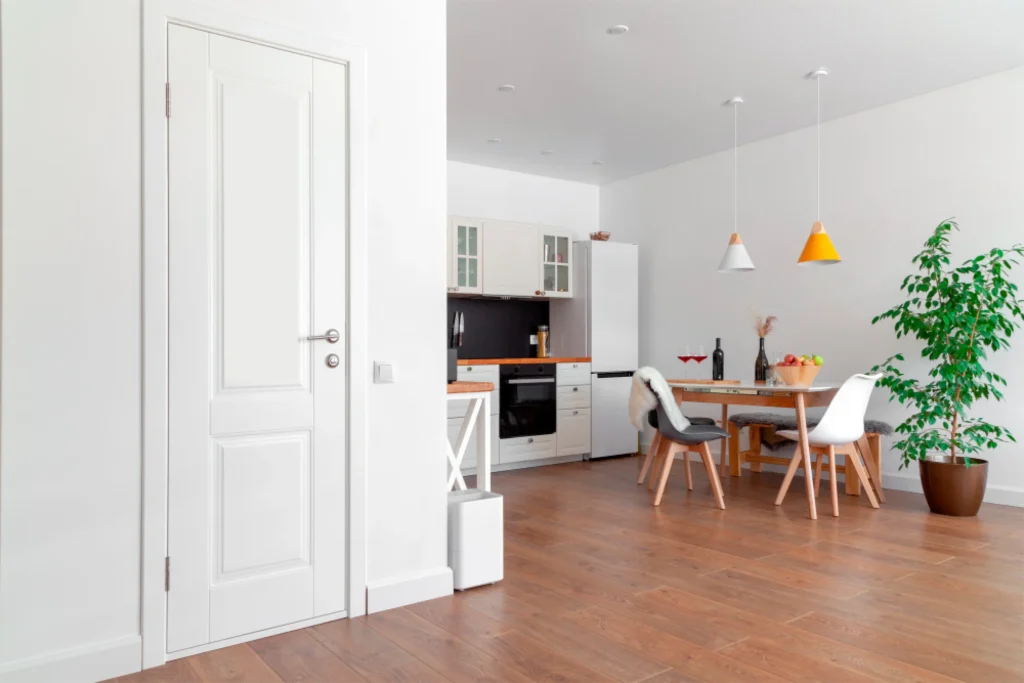
The 2-Panel Raised molded door offers two clean stacked panels with a subtle raised profile. This is one of the most versatile and widely used interior door styles it fits seamlessly in transitional, traditional, and contemporary homes alike.
Best for: Hallways, bedrooms, home offices, and multi-room installations where consistency matters.
5PR — 5-Panel Raised
The 5-Panel Raised molded door is a classic American interior door configuration. Featuring two smaller top panels and three larger bottom panels, this style has been a staple in North American homes for generations. It adds visual depth and traditional character to any space.
Best for: Farmhouse, colonial, craftsman, and traditional-style homes.
6PR — 6-Panel Raised
The 6-Panel Raised molded door is the most recognizable interior door style in North America. Its three rows of two panels create a balanced, timeless look that suits virtually any interior. It remains the most popular choice for residential new construction and renovation projects.
Best for: Any room in any home style the most universally loved interior door configuration.
M11 — 1-Panel Shaker
The 1-Panel Shaker molded door brings the clean minimalism of shaker design to the affordability and consistency of molded construction. A single large flat recessed panel creates an uncluttered, modern look that complements contemporary, Scandinavian, and modern farmhouse interiors perfectly.
Best for: Modern homes, open-plan living, minimalist interiors, and bedrooms.
M22 — 2-Panel Shaker
The 2-Panel Shaker molded door combines the simplicity of shaker design with two stacked flat recessed panels. This door bridges the gap between modern minimalism and traditional panel doors making it one of the most popular transitional-style interior doors available.
Best for: Transitional interiors, hallways, home offices, and modern traditional homes.
Interior Molded Door Styles: Quick Comparison
| Style | Panels | Best For | Design Mood |
|---|---|---|---|
| 2PA — Arch Top | 2 (Arched) | Traditional, Colonial | Elegant & Classic |
| 2PS — 2-Panel Raised | 2 (Raised) | Transitional, Traditional | Clean & Versatile |
| 5PR — 5-Panel Raised | 5 (Raised) | Farmhouse, Craftsman | Classic American |
| 6PR — 6-Panel Raised | 6 (Raised) | Any Style | Timeless & Universal |
| M11 — 1-Panel Shaker | 1 (Flat) | Modern, Contemporary | Minimalist & Clean |
| M22 — 2-Panel Shaker | 2 (Flat) | Transitional, Modern | Simple & Stylish |
Interior Molded Door Materials Explained
HDF (High-Density Fiberboard) Molded Skin
The door face (skin) is manufactured from HDF a dense, smooth composite material that is molded under heat and pressure. This process creates precise, consistent panel details and a surface that is ideal for painting. HDF skins are more stable than wood veneer and resist dents and scratches effectively.
Wood Frame Core
Inside every molded door is a structural wood frame. This frame provides rigidity, supports hinges and hardware, and gives the door its solid feel despite being lightweight overall. The frame is typically made from engineered wood or pine rails and stiles.
Hollow Core vs. Solid Core
Most molded doors are available in both hollow core and solid core options:
- Hollow Core Lightweight and budget-friendly. Ideal for closets, utility rooms, and low-traffic areas.
- Solid Core Heavier with significantly better sound insulation. Recommended for bedrooms, home offices, and main living spaces where privacy matters.
Popular Interior Molded Door Finishes in 2026
In 2026, these finishes are trending for interior molded doors across the USA and Canada:
- Primed White Ready to paint. The most practical and popular finish for new construction and renovation.
- Bright White Painted A clean, timeless look that works with almost any interior color palette.
- Warm Gray Popular in transitional and modern homes, complementing greige and warm neutral walls.
- Bold Black A dramatic, high-contrast choice. Especially popular in modern farmhouse and contemporary interiors.
- Two-Tone Door face in one color, frame and casing in another. A growing trend in 2026 interior design.
Standard Interior Molded Door Sizes (USA & Canada)
| Door Height | Door Width | Common Application |
|---|---|---|
| 6’8″ (2032mm) | 24″ – 30″ | Bathrooms, closets, utility rooms |
| 6’8″ (2032mm) | 32″ – 36″ | Standard bedrooms, hallways |
| 7’0″ (2134mm) | 24″ – 36″ | Modern homes, statement interiors |
| 8’0″ (2438mm) | 24″ – 36″ | High-ceiling homes, luxury interiors |
Custom sizing is available for non-standard openings in older homes. Always measure the rough opening (framed opening in the wall) before ordering standard clearance is door size + 2 inches on each side.
Interior Molded Door Cost Guide 2026
| Door Style | Price Range (USD) | Best For |
|---|---|---|
| 2PS — 2-Panel Raised (Hollow Core) | $60 – $150 | Rental, budget projects |
| 6PR — 6-Panel Raised (Hollow Core) | $70 – $160 | New construction, residential |
| M11 — 1-Panel Shaker (Hollow Core) | $80 – $180 | Modern, minimalist interiors |
| M22 — 2-Panel Shaker (Solid Core) | $150 – $320 | Bedrooms, home offices |
| 5PR — 5-Panel Raised (Solid Core) | $160 – $350 | Traditional, farmhouse homes |
| 2PA — Arch Top (Solid Core) | $180 – $400 | Statement rooms, upscale renovations |
Installation cost: $100 – $350 per door depending on location, complexity, and whether frame/casing work is required.
How to Choose the Right Interior Molded Door: 5 Steps
- Define Your Interior Style Choose raised panel doors (2PS, 5PR, 6PR) for traditional and transitional homes. Choose shaker-style molded doors (M11, M22) for modern, contemporary, or farmhouse interiors. The 2PA Arch Top works beautifully in colonial and craftsman homes.
- Choose Hollow or Solid Core For closets, bathrooms, and utility rooms: hollow core is perfectly adequate and more budget-friendly. For bedrooms, home offices, and main living spaces: invest in solid core for better sound insulation and a more premium feel.
- Select Your Finish Most molded doors come primed white, ready to paint. Decide on your wall and trim color scheme before choosing your door finish to ensure everything coordinates.
- Measure Your Opening Always measure the rough opening (framed opening in the wall), not the existing door. Standard rough opening = door size + 2 inches on each side. If your opening is non-standard, custom sizing is available.
- Match Your Hardware Keep hardware simple and consistent with your door style. For raised panel doors: brushed nickel or antique brass. For shaker molded doors: matte black or satin brass for a modern finish.
Common Mistakes to Avoid When Buying Interior Molded Doors
- Ordering without measuring the rough opening always measure before purchasing.
- Choosing hollow core for bedrooms invest in solid core where sound privacy matters.
- Using oil-based paint on primed HDF skins always use water-based latex paint for best adhesion.
- Ignoring door swing direction confirm left-hand vs. right-hand swing before ordering.
- Mismatching door style with trim ensure panel configuration complements your existing baseboards and casing.
- Skipping professional installation for solid core doors heavy doors require precise installation for proper swing and seal.
Frequently Asked Questions (FAQs)
What is an interior molded door?
An interior molded door is manufactured from an HDF (High-Density Fiberboard) skin that is molded under heat and pressure to create panel details, then bonded over a wood frame. They are highly consistent in quality, moisture-resistant, and ideal for painting making them one of the most popular and cost-effective interior door options available.
Are molded doors good quality?
Yes. Modern interior molded doors are manufactured to high quality standards. They are dimensionally stable, resistant to warping and cracking, and their smooth surface finishes beautifully. They are used in millions of homes across the USA and Canada in both budget and mid-range residential projects.
What is the difference between a molded door and a solid wood door?
A solid wood door is made entirely from natural timber, making it heavier and more expensive. It is also more susceptible to warping and moisture. A molded door uses an engineered HDF skin over a wood frame, making it lighter, more moisture-resistant, and significantly more affordable while still achieving a polished panel look.
Can interior molded doors be painted?
Absolutely. Interior molded doors come pre-primed and are specifically designed for painting. Their smooth HDF surface takes water-based latex paint exceptionally well. Apply a primer first if the door is not pre-primed, then two coats of quality interior paint for a professional finish.
What is the most popular interior molded door style?
The 6-Panel Raised (6PR) is the most popular interior molded door style in North America. Its balanced, classic look suits virtually every home style. The 2-Panel Shaker (M22) is the fastest-growing style in 2026 due to the ongoing popularity of transitional and modern farmhouse interior design.
Are hollow core molded doors suitable for bedrooms?
Hollow core doors work fine for closets and utility spaces, but for bedrooms where sound privacy matters solid core molded doors are a better investment. Solid core provides noticeably better sound insulation and a more substantial feel when closing.
What sizes do interior molded doors come in?
Standard interior molded doors in North America are available at heights of 6’8″, 7’0″, and 8’0″, with widths ranging from 24″ to 36″. Custom sizing is available for non-standard openings. Always measure your rough opening before ordering.
How do I know if I need a left-hand or right-hand door?
Stand in the doorway facing into the room. If the hinges are on your right and the door swings away from you into the room, it is a right-hand door. If the hinges are on your left, it is a left-hand door. Confirm the swing direction before placing your order to avoid returns.
Ready to Choose Your Interior Molded Doors?
Carlton Doors offers a complete selection of interior molded doors for residential and commercial projects across the USA and Canada. From the timeless 6-Panel Raised to the modern M11 and M22 Shaker styles, our range covers every home style and budget.
Whether you are renovating a single room or outfitting an entire property, our team is ready to help you find the perfect door for every opening.
Contact Carlton Doors
USA:
Phone:+1 (562) 545-1118
Email:info@carltondoors.com
Address: 16448 Manning Way, Cerritos, CA 90703
Canada:
Phone: +1 (437) 238-9088
Address: 2425 Meadowpine Blvd, Unit 2, Mississauga, ON L5N 6L7
Disclaimer: This article is for informational purposes only. Door sizes, materials, and prices may vary by supplier, region, and project requirements. Carlton Doors recommends consulting with a professional before making final purchasing decisions.
Last Updated: 2026 | Carlton Doors — USA & Canada