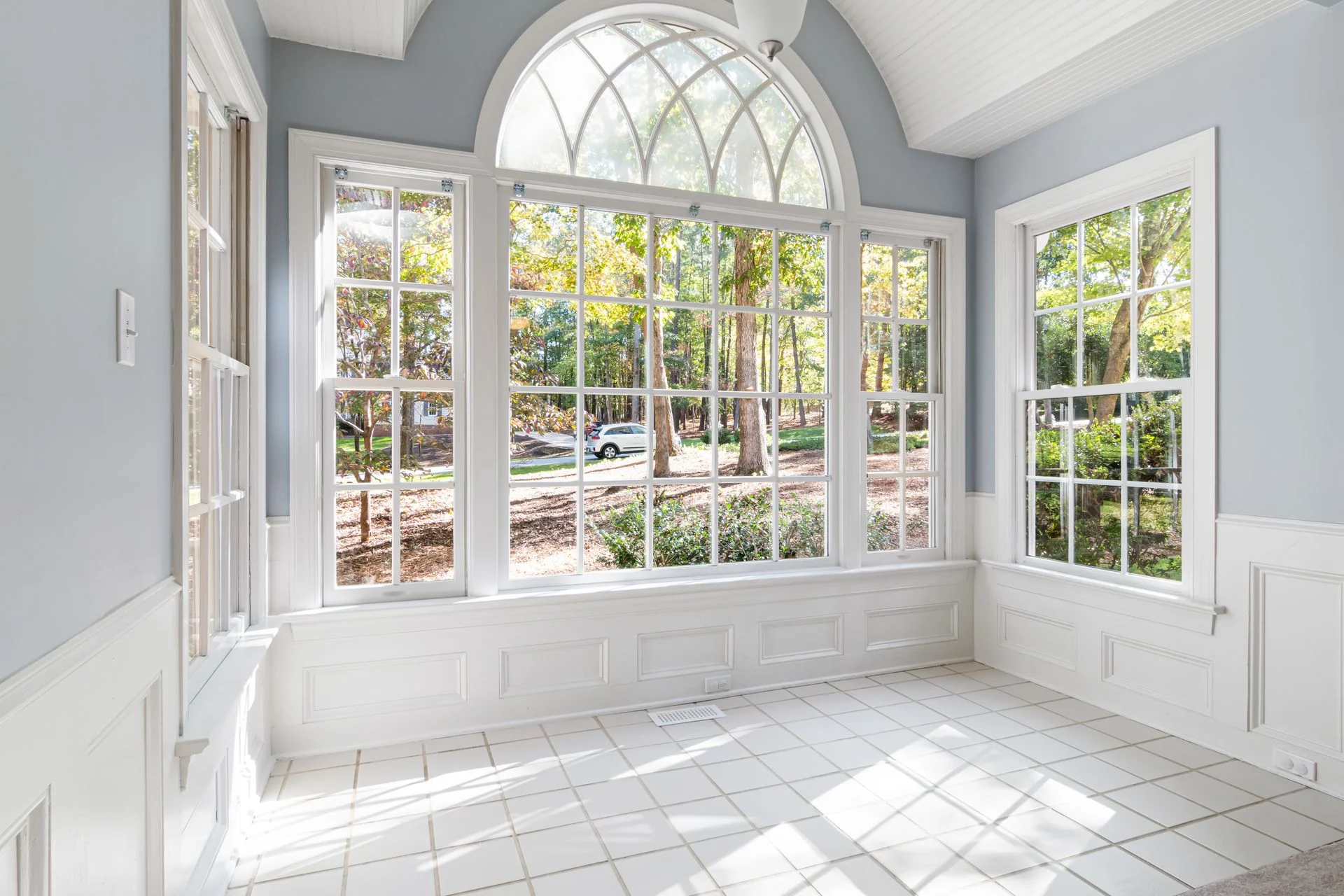
Choosing between a bay window vs bow window is one of the bigger decisions in a home renovation, since both styles project outward from the home and change the room’s shape, not just its light. Both add space, both add curb appeal, but they differ significantly in geometry, wall space requirements, and total cost.
This guide compares both styles honestly. What they are, how they perform, what they cost, and how to choose the right one before you commit to a project that involves structural changes to your home.
What Is a Bay Window?
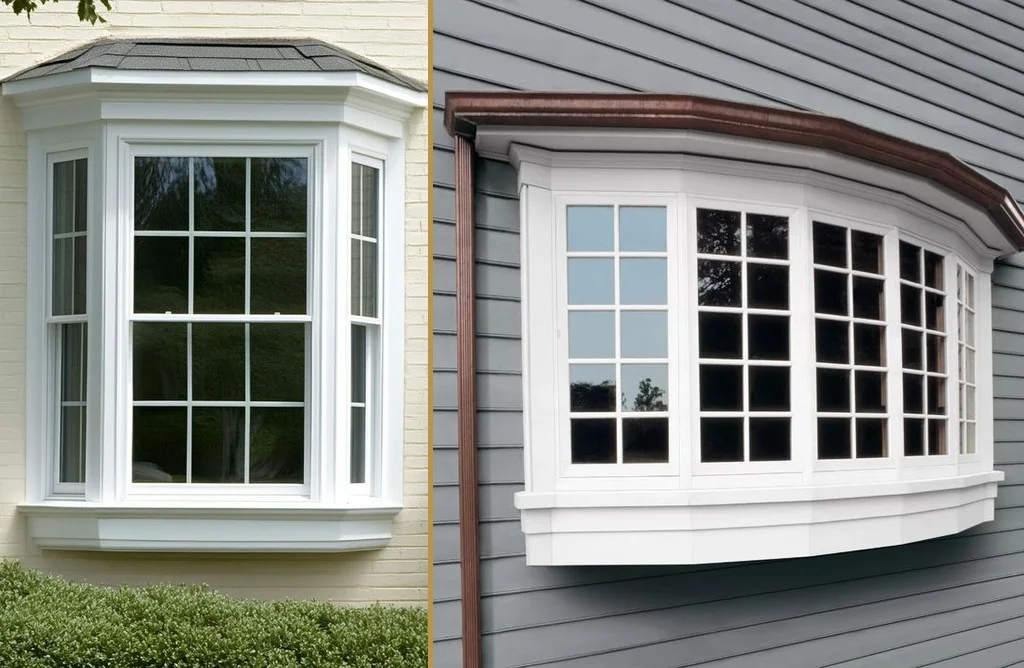
A bay window consists of one large central fixed picture window flanked by two smaller angled windows, usually casement or double-hung, that project outward from the exterior wall. The angles are typically set at 30, 45, or 90 degrees, which gives the window its distinct geometric shape.
Because the design uses just three panels, bay windows generally require less wall space and cost less than a comparable bow window. The angled side windows also tend to be operable, which gives bay windows a practical ventilation advantage.
What Is a Bow Window?
A bow window uses four to six equal-sized glass panels arranged in a gentle, curving structure, creating a smooth, rounded architectural feature rather than distinct angles. The panels sit at shallow angles to each other, which from the inside reads as a continuous curve rather than a series of corners.
Bow windows require more wall space, typically at least 80 inches, and because most or all of the panels are fixed rather than operable, they trade some ventilation for a wider, more panoramic view.
Bay Window vs Bow Window: Key Differences at a Glance
| Feature | Bay Window | Bow Window |
|---|---|---|
| Number of Panels | Exactly 3 | 4 to 6 |
| Shape | Sharp angles (30°, 45°, or 90°) | Gentle, sweeping curve |
| Wall Space Required | Smaller footprint, fits narrower walls | Wider wall needed, typically 80+ inches |
| Ventilation | Higher, side panels usually open | Lower, mostly fixed panels |
| Seating/Bench Potential | Strong, deep center sill | Limited, shallower curved sill |
| Cost Range | Lower | Higher |
| Best Home Style | Modern, transitional, most homes | Traditional, classic architecture |
Bay Window vs Bow Window: Pros and Cons of Bay Windows
Pros
Extra usable floor space. The center panel projects outward and creates a deep sill, which works well for a window seat, a reading nook, or even a small built-in storage bench.
Strong ventilation. The angled side windows are typically operable casement or double-hung units, so they open easily and can catch a cross breeze.
More budget-friendly. With only three panels and a simpler structural footprint, bay windows generally cost less in both materials and installation than a bow window of similar size.
Fits narrower walls. Because the footprint is smaller, bay windows can work in spaces where a bow window’s wider requirement wouldn’t fit.
Cons
Angular, segmented view. The view breaks into distinct geometric sections rather than one continuous panorama, which some homeowners find less dramatic than a bow window’s sweep.
Less suited to very wide walls. On a wide expanse of exterior wall, a bay window can look proportionally small compared to what a bow window would offer.
Bay Window vs Bow Window: Pros and Cons of Bow Windows
Pros
Panoramic, continuous view. The curved arrangement of panels creates a wide, uninterrupted view of the outdoors that a bay window’s angled sections can’t fully replicate.
Excellent natural light. With more glass panels facing slightly different directions, a bow window captures daylight from multiple angles throughout the day.
Strong curb appeal. The elegant, rounded silhouette adds a classic, high-end look that pairs especially well with traditional and historic architectural styles.
Cons
More complex installation. Bow windows are heavier and typically require additional structural support, such as tension cables or brackets, along with a custom roof skirt to shed water properly.
Limited ventilation. Most panels in a bow window are fixed to maintain the smooth curve. Adding multiple operable panels is possible but increases the price noticeably.
Harder to dress with curtains. A curved frame doesn’t work with standard straight curtain rods, so window treatments usually require a flexible track or a custom multi-jointed rod.
Bay Window vs Bow Window: Cost Comparison 2026
Prices below are estimated ranges based on current market data, including standard installation. Actual cost depends on size, framing material, and structural requirements. Contact Carlton Doors for accurate pricing on your specific project.
| Window Type | Unit Price (USD) | Total Installed Cost (USD) |
|---|---|---|
| Bay window, vinyl | $1,000 – $2,500 | $1,500 – $4,500 |
| Bay window, wood | $2,000 – $4,000 | $3,000 – $7,000 |
| Bow window, vinyl | $1,500 – $3,500 | $3,000 – $6,500 |
| Bow window, wood | $3,000 – $6,000 | $5,000 – $10,000+ |
Both styles involve more than a standard window swap, since the exterior wall needs framing work and, in most cases, a small roof skirt to shed water away from the window. A full home project in the USA involving one bay or bow window typically falls within these ranges, though homes needing structural reinforcement or roof integration can run higher. Canadian pricing in Ontario and British Columbia generally runs 10 to 20 percent higher than equivalent US pricing when converted to CAD.
How to Choose Between Bay Window vs Bow Window
Step 1: Measure your available wall space.
Bow windows typically need at least 80 inches of wall width to look proportional and function structurally. If your wall is narrower, a bay window is often the more practical fit.
Step 2: Decide how you’ll use the space.
If you want a window seat, reading nook, or storage bench, a bay window’s deep center sill works better than a bow window’s shallower curved sill.
Step 3: Think about ventilation needs.
Rooms that need airflow, like a kitchen or a bedroom without other operable windows, benefit from a bay window’s operable side panels. Bow windows can include opening panels, but it adds cost.
Step 4: Match the style to your home’s architecture.
Bow windows’ soft, rounded silhouette suits traditional and historic homes especially well. Bay windows’ clean angles work across a wider range of styles, including more modern and transitional homes.
Step 5: Confirm structural requirements with a contractor before ordering.
Both styles require exterior wall modifications and a roof skirt. A bow window’s added weight often calls for additional support, so get a structural assessment before finalizing your choice.
Common Mistakes to Avoid
Choosing based on looks alone.
A bow window can look stunning in photos but may simply not fit a narrow wall, or a bay window may look too small on a very wide expanse of exterior wall.
Underestimating the roof work involved.
Both styles need a small roof skirt or must tuck under an existing eave. Skipping this detail in early budgeting is a common and costly surprise later.
Ignoring window treatment logistics.
Bow windows need specialized curtain tracks due to the curve. Homeowners sometimes discover this only after installation, when standard curtain rods don’t fit.
Skipping a leak-prevention plan.
Because both styles project outside the home’s primary footprint, they’re more exposed to weather. Proper flashing and sealing during installation are not optional extras, they’re essential to preventing leaks.
Not checking ventilation needs before choosing bow.
If a room relies on this window for airflow, defaulting to a mostly-fixed bow window without planning for operable panels can leave the room stuffy.
Bay Window vs Bow Window: Summary Comparison
| Feature | Bay Window | Bow Window |
|---|---|---|
| Cost | Lower | Higher |
| View | Angular, segmented | Panoramic, continuous |
| Ventilation | Strong | Limited unless upgraded |
| Seating Potential | Strong | Limited |
| Wall Space Needed | Less | More |
| Best For | Most homes, functional space | Traditional homes, dramatic views |
Frequently Asked Questions
Which is more expensive, a bay window or a bow window?
Bow windows are generally more expensive. They use more glass panels, four to six compared to a bay window’s three, and require a more complex, heavier installation, including custom roof framing and often additional structural support.
Can you sit in a bow window like a window seat?
Not typically. A bow window’s gentle curve creates a shallower interior sill rather than true floor space. If a functional seating bench or reading nook is the goal, a bay window’s deep, flat center sill is the better choice.
Do bay or bow windows add value to a home?
Both styles can add value by improving curb appeal, increasing natural light, and making rooms feel larger to potential buyers. The specific value impact depends on the home, the neighborhood, and how well the window suits the home’s architecture.
Which style offers better ventilation, bay or bow?
Bay windows generally offer better ventilation, since their side panels are typically operable casement or double-hung units. Bow windows are made mostly of fixed panels to preserve the smooth curve, so airflow is more limited unless operable panels are added.
Can a standard flat window be replaced with a bay or bow window?
Yes, a contractor can convert a standard window opening into a bay or bow window, but it requires structural modifications, proper support framing, and integrating a roof skirt into the exterior wall.
Do bay and bow windows require a special roof?
Yes. Because both styles project outward beyond the home’s exterior wall, they need their own small roof skirt, sometimes called a hip roof, or must be installed directly under an existing overhanging eave.
Are bay and bow windows more prone to leaking than standard windows?
They can be if installed poorly, since they sit outside the home’s main footprint and are more exposed to weather. Proper flashing, sealing, and roof construction during installation are essential to prevent leaks over time.
How do you hang curtains on a bow window?
Standard straight curtain rods don’t work on a bow window’s curved frame. Most homeowners use a flexible curtain track or a custom multi-jointed rod designed to follow the curve.
Which window style suits a modern home better?
Bay windows, with their sharp angles and clean geometric lines, tend to fit contemporary and transitional home styles more naturally than a bow window’s traditionally softer, rounded profile, though the right choice still depends on the home’s overall architecture.
What are the best frame materials for bay and bow windows?
Vinyl is the most cost-effective and low-maintenance option. Wood offers a premium, classic look but requires regular painting or staining. Fiberglass offers strong durability and energy efficiency at a higher price point than vinyl.
Ready to Choose Your Bay or Bow Window?
Carlton Doors supplies bay and bow windows for homeowners and builders across the USA and Canada. Whether you want the practical space and ventilation of a bay window or the panoramic view of a bow window, the Carlton Doors team can help you find the right style, material, and size for your home and budget.
Get in touch for product availability, accurate pricing, and guidance on your window project.
Contact Carlton Doors
USA:
Phone:+1 (562) 545-1118
Email:info@carltondoors.com
Address: 16448 Manning Way, Cerritos, CA 90703
Canada:
Phone: +1 (437) 238-9088
Address: 2425 Meadowpine Blvd, Unit 2, Mississauga, ON L5N 6L7
Disclaimer: This article is for informational purposes only. Window styles, pricing, and availability may vary by region and supplier. All prices listed are estimated ranges and are subject to change. Carlton Doors recommends consulting with a professional before making final purchasing decisions.
Carlton Doors USA & Canada