Choosing between vinyl vs hardwood flooring is one of the biggest calls in any home renovation. Both floors look great on day one. They behave very differently once you add water, pets, kids, and a few years of daily use. This guide compares vinyl vs hardwood flooring on cost, durability, and the best rooms for each, so you can pick the right floor the first time.
Quick answer: In the vinyl vs hardwood flooring debate, vinyl wins on water resistance, scratch resistance, and upfront price. That makes it the better choice for kitchens, bathrooms, and basements. Hardwood wins on lifespan, resale value, and natural beauty. That makes it the better choice for living rooms and bedrooms.
Vinyl vs Hardwood Flooring at a Glance
Here is a quick snapshot of vinyl vs hardwood flooring before we go deeper into each topic.
| Feature | Vinyl Plank (LVP) | Hardwood |
|---|---|---|
| Material | Layered PVC with a printed wood image | Solid or engineered real wood |
| Typical lifespan | 15 to 25 years | 30 to 100+ years with refinishing |
| Water resistance | Waterproof surface and core (SPC and WPC) | Low to moderate |
| Scratch resistance | High with a 12 mil or thicker wear layer | Moderate |
| Can you refinish it? | No | Yes, 4 to 7 times (solid wood) |
| Installed cost per sq. ft. (USD) | $3 to $7 | $6 to $15 |
| Resale value impact | Neutral to modest | Strong |
| DIY-friendly | Yes, click-lock planks | Engineered floating floors yes; solid wood usually needs a pro |
| Best rooms | Kitchen, bathroom, basement, laundry | Living room, bedroom, dining room, hallway |
What Is Vinyl Flooring?
Vinyl flooring is a synthetic floor made from layers of PVC (polyvinyl chloride). A clear wear layer on top protects the surface. Under it, a printed design layer copies the look of wood. A core and a backing layer complete each plank.
Most homeowners who compare vinyl vs hardwood flooring look at luxury vinyl plank, or LVP. It comes in long planks that mimic wood and locks together without nails or glue. Sheet vinyl and luxury vinyl tile (LVT) also exist, but LVP is the closest match for hardwood.
Two details decide how well a vinyl floor performs.
Wear layer thickness. Manufacturers measure this clear top layer in mils, and one mil equals one thousandth of an inch. A 6 to 8 mil layer suits light-use rooms. For most homes, choose 12 mil or more. For busy households with dogs, choose 20 mil.
Core type. SPC (stone plastic composite) has a dense, rigid core that resists dents and holds up under heavy furniture. WPC (wood plastic composite) has a thicker, softer core that feels more comfortable underfoot and muffles sound better. Both core types are waterproof.
What Is Hardwood Flooring?
Hardwood flooring comes from real timber, such as oak, maple, hickory, or walnut. It comes in two types.
- Solid hardwood: One piece of wood from top to bottom. You can sand and refinish it several times. It performs best in dry, stable rooms above ground level.
- Engineered hardwood: A real wood veneer bonded to layers of plywood or high-density fiberboard. It handles humidity and temperature swings better than solid wood, so you can install it in more rooms, including some basements.
When you weigh vinyl vs hardwood flooring, keep this in mind: engineered hardwood sits closer to vinyl on price and stability, while solid hardwood sits at the premium end.
Vinyl vs Hardwood Flooring Cost in 2026
Price is often the first factor in a vinyl vs hardwood flooring decision. The tables below show typical installed prices, which include materials and professional labor.
Installed cost per square foot (USD)
| Floor Type | Estimated Cost |
|---|---|
| Vinyl plank (12 to 20 mil, SPC or WPC) | $3 to $7 |
| Engineered hardwood | $6 to $12 |
| Solid hardwood, oak | $8 to $15 |
| Solid hardwood, walnut or exotic species | $12 to $22 |
Approximate installed cost per square foot (CAD)
| Floor Type | Estimated Cost |
|---|---|
| Vinyl plank (12 to 20 mil, SPC or WPC) | C$4 to C$10 |
| Engineered hardwood | C$8 to C$16 |
| Solid hardwood, oak | C$11 to C$20 |
| Solid hardwood, walnut or exotic species | C$16 to C$30 |
We converted the Canadian figures at roughly 1.35 and rounded them. Labor and shipping costs in Ontario and British Columbia can push final quotes 10 to 20 percent higher.
A 300 square foot room costs roughly $900 to $2,100 in vinyl and $1,800 to $6,600 in hardwood. Those numbers cover the floor only. Budget extra for these items:
- Subfloor repair or leveling
- Removing the old flooring
- Underlayment, if the planks do not include a pad
- New baseboards, quarter round, and transition strips
Which floor costs less over time? Vinyl costs less upfront, but most vinyl floors need replacing after 15 to 25 years. A hardwood floor costs more on day one, yet you can refinish it for about $3 to $8 per square foot instead of tearing it out. Over 30 years or more, a well-kept hardwood floor can cost less per year than two vinyl installations. That long-term math is the most overlooked part of the vinyl vs hardwood flooring decision.
Durability: Which Floor Lasts Longer?
Durability means different things depending on what you worry about most. Here is how vinyl vs hardwood flooring compares on the four problems homeowners raise most often.
Lifespan
Lifespan is where vinyl vs hardwood flooring differ most.
Quality vinyl plank lasts 15 to 25 years. Hardwood lasts 30 years at the low end and over 100 years in well-kept homes, because you can sand away damage and refinish the surface. Vinyl has no such reset button. Once the wear layer is worn through, you replace the planks.
Scratches and Dents
Thick vinyl resists scratches better than hardwood. A 20 mil wear layer shrugs off pet nails, dropped toys, and chair legs. Hardwood scratches more easily, and softer species like pine and walnut dent under heavy furniture.
SPC vinyl resists dents well, but a heavy appliance can still leave a mark on softer WPC planks. Felt pads under furniture protect both floors.
Sun and Heat
Strong sunlight through large windows can fade vinyl and, in extreme cases, make planks expand and buckle. Hardwood also changes color in direct sun, usually darkening or lightening depending on the species. Use curtains, blinds, or UV window film in south-facing rooms with either floor.
Pets and Kids
For busy households, vinyl has the edge. It tolerates scratches, spills, and accidents without a second thought. Hardwood works fine for families too, but it shows wear sooner, and urine or standing water can stain or warp the boards.
Water Resistance: Where Vinyl Wins
Water is the biggest dividing line in the vinyl vs hardwood flooring comparison.
Vinyl plank flooring with an SPC or WPC core is waterproof. Spills, mopping, and humidity do not hurt the planks. That said, standing water can still seep through the seams and get under the floor, so wipe up large spills quickly.
Hardwood reacts to moisture. Water that sits on the surface can cup, warp, or stain the boards. Solid hardwood is the most sensitive. Engineered hardwood handles humidity better, but you still should not install either one in a bathroom or laundry room.
If you want a hardwood look in a damp space, choose a high-quality vinyl plank instead of trying to protect real wood from water.
Look and Feel
Looks play a big role in the vinyl vs hardwood flooring decision.
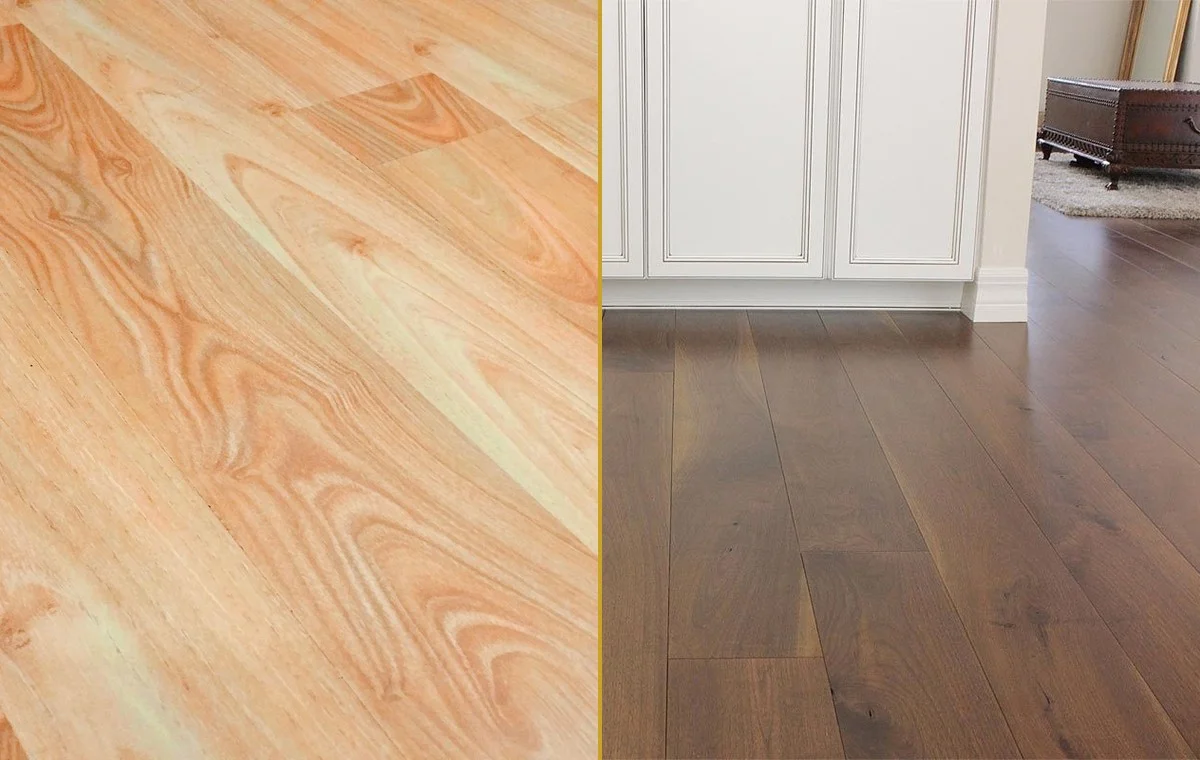
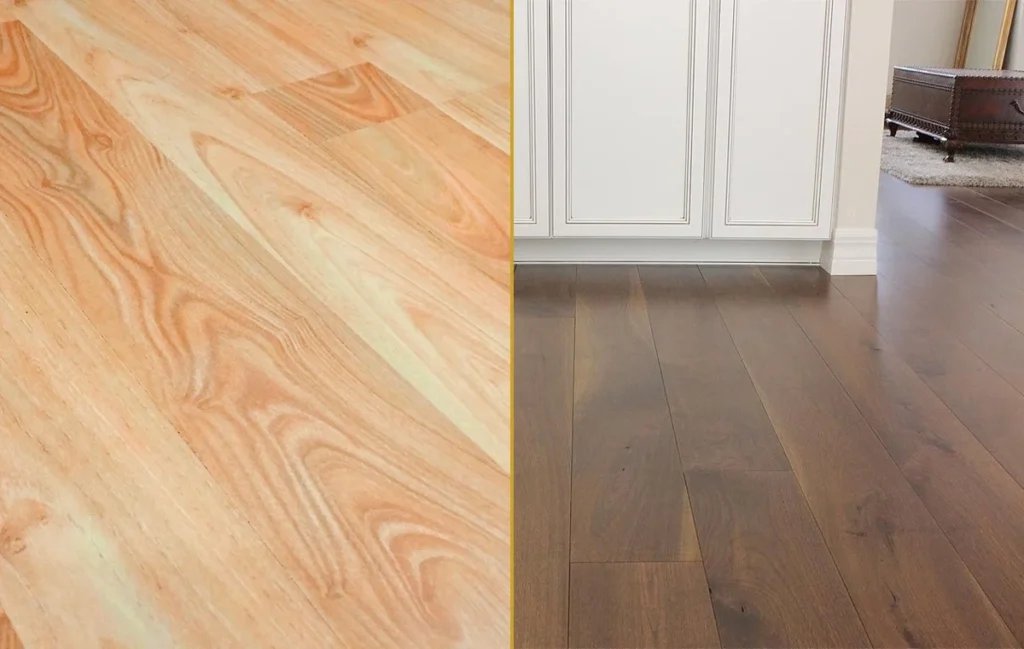
Hardwood has the better look because it is real wood. Every plank has its own grain, knots, and color shifts. Over the years, the floor develops a patina that many homeowners love.
Modern vinyl has closed much of the gap. Premium LVP uses embossed texture that lines up with the printed grain, so the surface feels like wood under your hand. From a few feet away, many people cannot tell the difference. Up close, vinyl repeats its pattern across planks, and hardwood does not.
Feel underfoot differs too. WPC vinyl feels softer and quieter to walk on. Hardwood feels solid and sounds more resonant, especially without a rug.
Best Rooms for Vinyl vs Hardwood Flooring
The room often decides the winner, and vinyl vs hardwood flooring is not an all-or-nothing choice. Use this table as a starting point.
| Room | Better Choice | Why |
|---|---|---|
| Kitchen | Vinyl | Handles spills, dropped dishes, and heavy foot traffic |
| Bathroom | Vinyl | Waterproof and safe around humidity |
| Basement | Vinyl | Resists moisture rising from below grade |
| Laundry room | Vinyl | Survives leaks and wet laundry baskets |
| Mudroom or entryway | Vinyl | Takes wet boots, salt, and grit |
| Living room | Hardwood | Adds warmth, beauty, and resale value |
| Bedroom | Hardwood or vinyl | Low moisture risk, so choose by style and budget |
| Dining room | Hardwood | Looks best in a showpiece room with moderate wear |
| Hallway | Either | Vinyl for budget and durability, hardwood for a seamless look |
| Stairs | Hardwood | Gives a solid, traditional finish |
| Home office | Either | Use a chair mat on both floors |
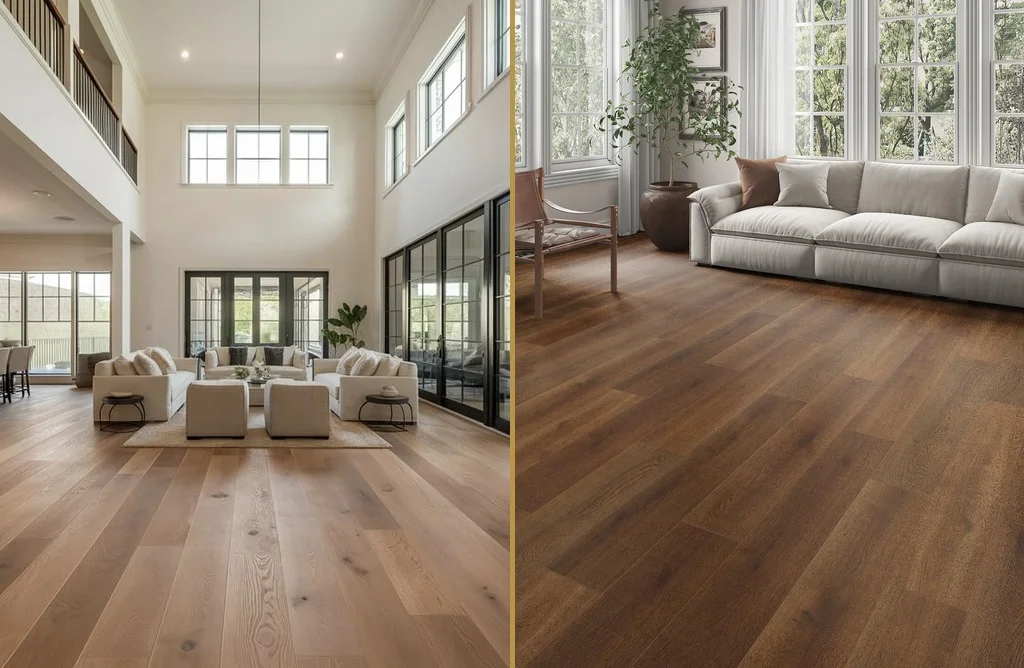
Many homeowners mix both floors. They install hardwood in the main living areas and vinyl in the kitchen, bathrooms, and basement. Match the wood tone and plank width, and the two floors look like one design.
Resale Value
Resale value is another area where vinyl vs hardwood flooring splits.
Hardwood adds more value when you sell. Real estate agents and buyers list hardwood floors as a selling point, and homes with hardwood often attract stronger interest.
Vinyl rarely hurts a sale, and buyers appreciate premium LVP in kitchens and basements. It does not add the same premium as real wood, though.
If you plan to stay for 10 years or less, vinyl gives you better value for the money. If you plan to stay long term or sell in a market that rewards hardwood, the higher cost can pay off.
Maintenance and Cleaning
Vinyl: Sweep or vacuum weekly, and mop with a damp mop and a pH-neutral cleaner. Skip steam mops and abrasive pads, which can damage the wear layer. Wipe up large spills fast to keep water out of the seams.
Hardwood: Sweep or vacuum weekly with a soft-bristle attachment. Clean with a barely damp mop and a wood-specific cleaner. Never wet-mop hardwood. Every few years, a screen-and-recoat can refresh the finish before scratches reach the bare wood.
Maintenance rarely decides the vinyl vs hardwood flooring question, but it matters over the years. Vinyl takes less effort day to day. Hardwood takes a little more care, but it rewards you with a repairable surface.
Vinyl vs Hardwood Flooring: Pros and Cons
Use these lists to weigh vinyl vs hardwood flooring side by side.
Vinyl Pros
- Lower upfront cost
- Waterproof, so it works in any room
- Strong scratch resistance with a thick wear layer
- DIY-friendly click-lock installation
- Comfortable and quiet underfoot, especially WPC
Vinyl Cons
- Cannot be refinished
- Adds less resale value than hardwood
- Can fade or buckle in strong direct sunlight
- Shorter lifespan than hardwood
Hardwood Pros
- Lasts for decades and can be refinished 4 to 7 times
- Adds real resale value
- Natural grain and a patina that improves with age
- Available as solid or engineered wood
Hardwood Cons
- Higher upfront cost
- Scratches and dents more easily than vinyl
- Reacts to moisture, so it does not suit wet rooms
- Solid hardwood does not work in basements
How to Choose Between Vinyl vs Hardwood Flooring
Follow these five steps to settle the vinyl vs hardwood flooring question for your home.
- Start with the room. Wet or below-grade rooms point to vinyl. Dry, upper-level living spaces give you a free choice.
- Think about how long you will stay. Plan to stay 15 years or more? Hardwood earns its price. Planning to move or remodel again within 10 years? Vinyl saves money.
- Count your pets and kids. A busy household with dogs and young children wears floors fast. Pick vinyl with a 20 mil wear layer, or a hard species like oak or hickory.
- Set a realistic budget. Add the hidden costs from the cost section before you fall for a specific product.
- Decide who installs it. Click-lock vinyl suits experienced DIYers. Nail-down or glue-down hardwood belongs in the hands of a professional.
Common Mistakes to Avoid
These mistakes trip up many homeowners who choose between vinyl vs hardwood flooring.
Buying vinyl with a thin wear layer. A cheap 6 mil plank looks fine in the store and scuffs within a year in a busy kitchen. Check the mil rating before you buy.
Installing solid hardwood in a basement. Moisture from below grade causes cupping and gaps. Choose vinyl or a properly installed engineered floor.
Skipping subfloor prep. Both floors show every bump and dip underneath. Level and clean the subfloor first.
Wet-mopping hardwood. Water seeps between boards and causes warping. Use a barely damp mop and a wood-safe cleaner.
Choosing by photo alone. Always order samples and view them in your own lighting. A plank can look very different in a showroom than in your home.
Final Verdict: Vinyl vs Hardwood Flooring
In the end, vinyl vs hardwood flooring comes down to the room, your budget, and how long you plan to stay.
Choose vinyl if you need a waterproof floor, you have pets or young kids, you want to save money upfront, or you plan to update the room again within 10 to 15 years.
Choose hardwood if you want the natural look of real wood, you plan to stay in the house for years, you care about resale value, or you like the idea of refinishing instead of replacing.
Mix both if your home has wet rooms and living areas. Use vinyl where water is a risk and hardwood where beauty matters most.
Frequently Asked Questions
What is the main difference between vinyl vs hardwood flooring?
Vinyl is a waterproof synthetic floor that costs less, while hardwood is real wood that costs more, lasts longer, and can be refinished. Vinyl suits wet and busy rooms. Hardwood suits living areas and homeowners who want long-term value.
Is vinyl flooring cheaper than hardwood?
Yes. Installed vinyl plank costs roughly $3 to $7 per square foot in the USA, while hardwood costs $6 to $22 depending on the species and type. In Canada, expect about C$4 to C$10 for vinyl and C$8 to C$30 for hardwood.
Which lasts longer, vinyl or hardwood flooring?
Hardwood lasts longer. Solid hardwood can last 30 to 100 years because you can sand and refinish it. Quality vinyl lasts about 15 to 25 years and needs replacing once the wear layer wears out.
Is vinyl vs hardwood flooring a big difference for resale value?
Yes. Hardwood usually adds more resale value and often appears as a selling point in listings. Vinyl is viewed neutrally by most buyers. Premium vinyl in a kitchen or basement rarely hurts a sale.
Is vinyl or hardwood flooring better for kitchens?
Vinyl is the better choice for most kitchens. It resists spills, drips, and dropped dishes. Hardwood can work in a kitchen, but water near the sink and dishwasher puts it at greater risk.
Can you install hardwood in a basement?
Solid hardwood does not suit basements because of moisture below grade. Engineered hardwood can work in some basements with a moisture barrier. Vinyl plank is the safer, easier choice.
Does vinyl flooring look like real wood?
Premium vinyl plank looks very close to real wood. Embossed textures line up with the printed grain, and many people cannot tell the difference at a glance. Hardwood still shows more natural variation up close.
Which is better for pets in the vinyl vs hardwood flooring comparison?
Vinyl wins for pets. A 20 mil wear layer resists scratches from claws, and the surface handles accidents without damage. Hardwood scratches more easily, and pet urine can stain it.
Can you refinish vinyl flooring?
No. You cannot sand or refinish vinyl. If a plank is damaged, you replace that plank or the section. Click-lock vinyl makes small repairs easier than most floors.
Ready to Choose Your Flooring?
Still stuck on vinyl vs hardwood flooring? Carlton Doors helps homeowners and builders across the USA and Canada choose the right material, style, and finish for their budget. Tell us about your room and your plans, and our team will walk you through vinyl vs hardwood flooring and point you toward the best fit.
Get in touch for product availability, accurate pricing, and guidance on your flooring project.
Contact Carlton Doors
USA:
Phone:+1 (562) 545-1118
Email:info@carltondoors.com
Address: 16448 Manning Way, Cerritos, CA 90703
Canada:
Phone: +1 (437) 238-9088
Address: 2425 Meadowpine Blvd, Unit 2, Mississauga, ON L5N 6L7
Disclaimer: This article is for informational purposes only. Flooring styles, pricing, and availability vary by region and supplier. All prices are estimated ranges and may change. Carlton Doors recommends consulting a professional before you make a final purchase.