When homeowners plan a kitchen remodel, the style decision almost always comes down to shaker cabinets vs flat panel cabinets. Both are popular. Both look great in the right setting. But they are built differently, they suit different design directions, and they sit at different price points. Picking the wrong one is easy and expensive to fix.
This guide covers both styles honestly. What they are, how they compare, what they cost, and how to pick the right one before you spend a dollar.
What Are Shaker Cabinets?
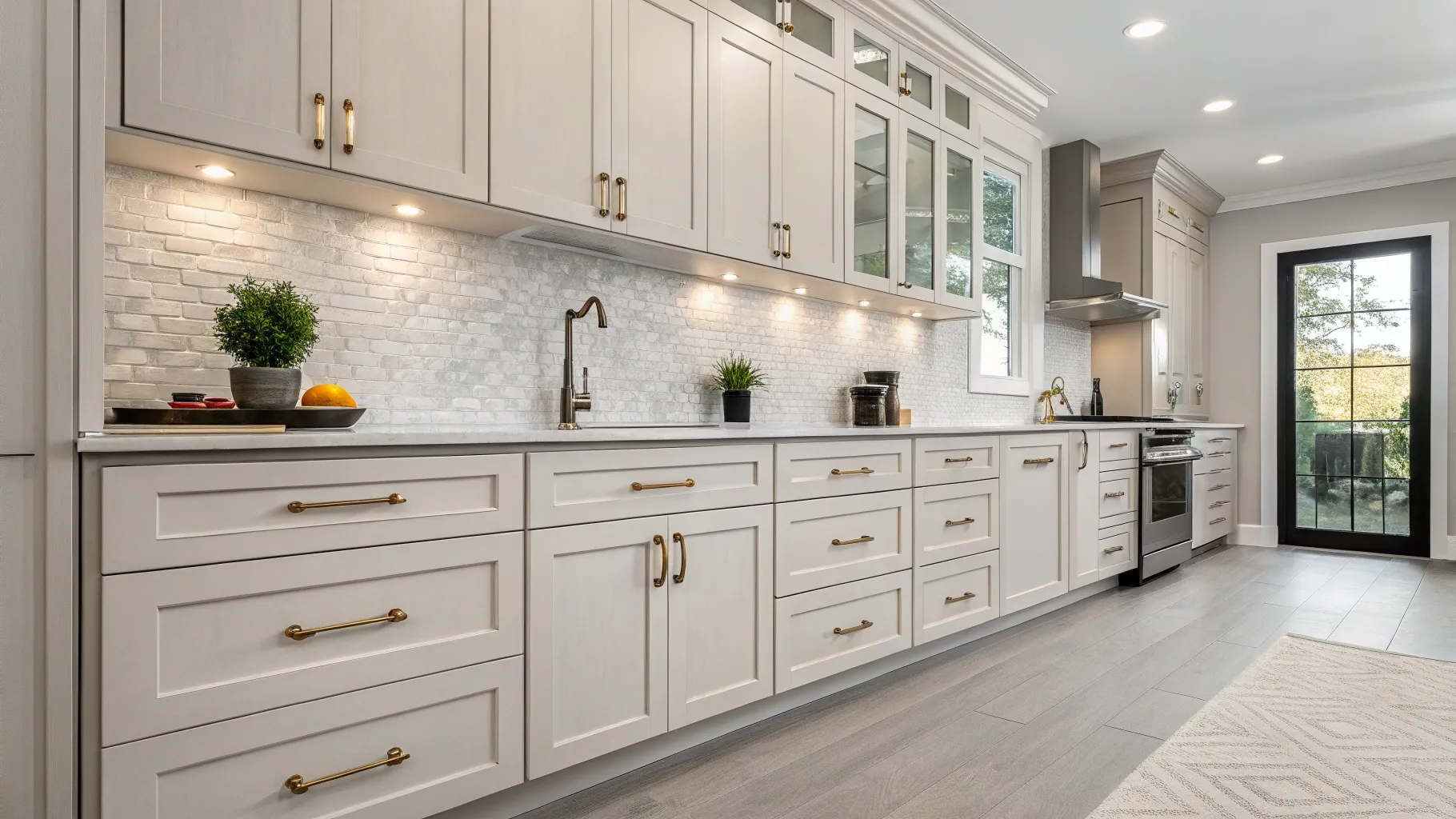
Shaker cabinets have a five-piece door: four rails forming a frame around a single recessed flat center panel. The result is a door with shadow lines, clean structure, and a look that has worked in American kitchens for over a hundred years.
The style came from the Shaker religious community in the 1800s people who built furniture around simplicity and function with nothing wasted. That same restraint is why shaker cabinets still fit in so many kitchens today. They work in traditional, transitional, farmhouse, and even some softly modern designs without feeling out of place.
Shaker cabinets take both paint and stain well. White, soft gray, navy, sage green, and natural wood tones all look strong on the shaker profile. The frame detail catches light and adds depth, which makes a kitchen feel layered without looking busy.
What Are Flat Panel Cabinets?
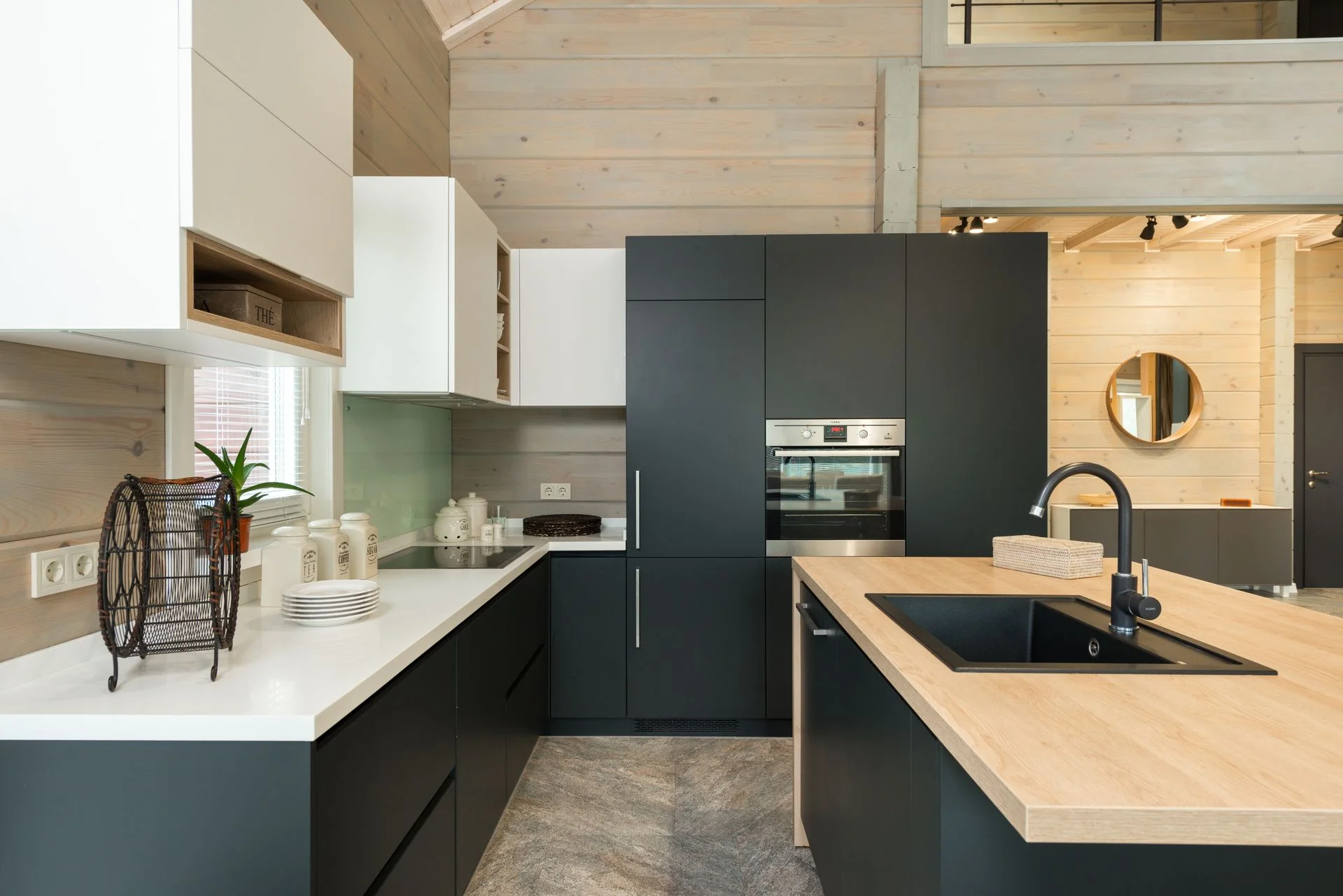
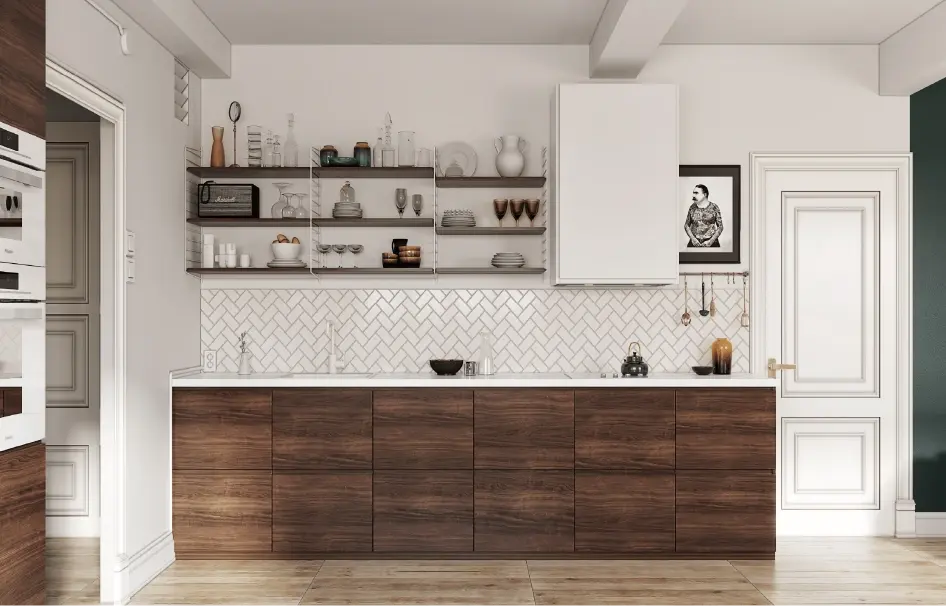
Flat panel cabinets also called slab cabinets use a single uninterrupted surface for the door. No frame, no rails, no recessed center. Just a clean, flat plane of material from edge to edge.
The look is minimal. It fits modern and contemporary kitchens where clean lines and open surfaces are the point. Flat panel doors are also easier to wipe down because there are no corners or grooves where grease and debris collect.
High-gloss lacquer, matte paint, and wood veneer all appear on flat panel doors. The style is especially common in European-influenced kitchen design and has grown steadily across the USA over the past decade. In new construction modern homes and urban kitchen renovations, flat panel is now the dominant choice.
Shaker Cabinets vs Flat Panel: Key Differences at a Glance
| Feature | Shaker Cabinets | Flat Panel Cabinets |
|---|---|---|
| Door Construction | Five-piece frame with recessed center | Single flat slab, no frame |
| Best Kitchen Style | Traditional, transitional, farmhouse | Modern, contemporary, minimalist |
| Finish Options | Paint, stain, natural wood | High-gloss, matte, wood veneer |
| Cleaning | Slightly harder (recessed corners) | Easier (flat surface) |
| Cost Range | Mid-range | Mid to high range |
| Durability | Very durable | Durable depends on material |
| Timelessness | Classic, rarely dates | More trend-dependent |
| Resale Appeal | Broad buyer appeal | Strong in urban and modern markets |
Shaker Cabinets vs Flat Panel: Pros and Cons of Shaker
Pros
Works in almost any kitchen. Shaker cabinets are one of the most versatile cabinet styles ever built. Whether your kitchen runs farmhouse, transitional, or classic American, shaker fits without a fight. Real estate professionals consistently recommend them because they appeal to the widest range of buyers.
Ages well. Shaker cabinets have been popular for decades and show no sign of fading. Choosing shaker means you are not betting on a trend you are buying something with a long track record.
More finish flexibility. The frame adds structure and dimension, so shaker doors look equally strong painted or stained. You get more design range from the same door profile.
Easier to repair. If the center panel gets damaged, it can often be replaced without changing the full door an advantage that slab cabinets do not offer.
Cons
Harder to clean. The recessed center and the inner edges of the frame collect grease, crumbs, and moisture. In a busy kitchen, that means more time cleaning corners.
Can feel traditional. In a strongly modern or minimalist kitchen, shaker cabinets can carry a traditional association that works against the design intent.
More visual noise in large kitchens. A big kitchen with wall-to-wall shaker doors can feel busy because every door has a visible frame detail. Flat panel reads cleaner at scale.
Shaker Cabinets vs Flat Panel: Pros and Cons of Flat Panel
Pros
Clean and modern. The uninterrupted flat surface reads as contemporary and minimal. For homeowners building or renovating a modern kitchen, flat panel usually wins on first look.
Easier to maintain. No grooves means no buildup. A quick wipe handles most messes, which matters in a kitchen that gets daily use.
Handles bold materials well. High-gloss lacquer, concrete-look finishes, and book-matched wood veneer show better on a flat panel door because nothing interrupts the surface.
Performs well in premium markets. In urban real estate markets Los Angeles, New York, Toronto, Vancouver modern flat panel kitchens often attract buyers who expect that look and are willing to pay for it.
Cons
Hides nothing. Scratches, dings, and fingerprints show up clearly on a flat surface, especially in dark or high-gloss finishes. Matte finishes are more forgiving, but the slab still shows wear faster than a framed door.
More trend-dependent. The flat panel aesthetic is closely tied to current design trends. What feels sharp in 2026 may feel dated in fifteen years in a way that shaker rarely does.
Less finish range. Flat panel works well with painted and lacquered finishes but can look cold or unfinished with warm stain tones, especially without natural grain texture.
Higher cost in premium materials. A truly flat, seamless surface requires tighter tolerances and better materials. Budget flat panel doors often develop visible seams or warping over time.
Shaker Cabinets vs Flat Panel: Cost Comparison 2026
Prices below are estimated ranges based on current market data. Actual cost depends on material, finish, cabinet size, and supplier. Contact Carlton Doors for accurate pricing based on your specific project.
| Cabinet Type | Estimated Price Per Linear Foot (USD) |
|---|---|
| Shaker stock or semi-custom | $150 – $350 |
| Shaker custom | $300 – $650 |
| Flat Panel stock or semi-custom | $175 – $400 |
| Flat Panel custom | $350 – $800 |
| Flat Panel high-gloss premium | $500 – $1,200 |
Installation typically adds $50 to $150 per linear foot depending on location and project scope. Full kitchen cabinet installations in the USA generally run between $3,000 and $15,000 all in, depending on kitchen size, materials, and region. Canadian pricing in Ontario and British Columbia tends to run 10 to 20 percent higher than US estimates when converted to CAD.
How to Choose Between Shaker Cabinets vs Flat Panel Cabinets
Step 1: Start with your home’s architecture.
If your home has traditional trim, crown moulding, or classic American styling, shaker is the natural fit. If it is a modern build with clean lines and minimal detail, flat panel is the right direction.
Step 2: Think about long-term resale.
Shaker cabinets carry broad buyer appeal across demographics and markets. Flat panel performs well in urban and coastal markets but may feel too niche in suburban or traditional neighborhoods. If resale is a priority, shaker is usually the safer call.
Step 3: Be honest about your cleaning habits.
A busy family kitchen with young kids gets dirty fast. Flat panel is quicker to wipe down. If cleaning cabinet grooves sounds like a weekly frustration, that is a real factor worth weighing before you decide.
Step 4: Match the finish to the door style.
Shaker handles paint and stain equally well. Flat panel works best with painted, lacquered, or veneer finishes. Choose the finish you want first, then pick the door style that delivers it best.
Step 5: Set your budget before you fall in love with a finish.
Both styles come at a range of price points. Custom flat panel in premium materials can cost significantly more than mid-range shaker. Know your number before you start shopping in person.
Common Mistakes to Avoid
Choosing based on photos alone. What looks right in a styled photo shoot may not suit your actual kitchen, your lighting, or your daily routine. Use inspiration photos as a starting point not a final decision.
Ignoring hardware. The pulls and handles you choose affect both styles differently. Shaker pairs well with cup pulls, bin pulls, and traditional knobs. Flat panel usually calls for long bar pulls or integrated handles to keep the minimal look consistent. Wrong hardware undermines even the right cabinet style.
Skipping the material conversation. Not all shaker or flat panel cabinets are built the same. Solid wood, MDF, plywood core what is underneath the finish determines durability, humidity resistance, and long-term performance. Always ask before you buy.
Mixing styles without a plan. Some homeowners mix shaker uppers with flat panel lowers for a two-tone effect. This can look deliberate and sharp or like an accident. It needs to be designed intentionally, not assembled by default.
Not measuring twice. Cabinet sizing mistakes are expensive. Measure your kitchen carefully, account for appliance clearances, and verify the layout with a professional before placing any order.
Frequently Asked Questions
Which is better: shaker cabinets or flat panel cabinets?
Neither is objectively better. Shaker cabinets work better in traditional, transitional, and farmhouse kitchens. Flat panel cabinets suit modern and contemporary spaces. The right choice depends on your home’s style, your budget, and how you use your kitchen day to day.
Are shaker cabinets more expensive than flat panel?
Not always. Stock shaker and stock flat panel cabinets are often priced similarly. Custom flat panel in premium finishes like high-gloss lacquer or book-matched veneer can cost significantly more than mid-range shaker options.
Do shaker cabinets go out of style?
Shaker cabinets have been popular in American kitchens for over a hundred years. Most design professionals consider them a classic style, not a trend. They are generally a safer long-term investment than more fashion-forward cabinet profiles.
Are flat panel cabinets hard to keep clean?
The flat surface is easy to wipe down no recessed corners means no buildup. However, scratches and fingerprints show up more clearly, especially on high-gloss or dark finishes. Matte flat panel finishes hide daily marks better.
What hardware works best with shaker cabinets vs flat panel cabinets?
Shaker cabinets work well with cup pulls, bin pulls, bar pulls, and traditional knobs. Flat panel cabinets typically use long bar pulls or integrated handles to keep the clean, minimal look intact.
Can shaker cabinets work in a modern kitchen?
Yes, depending on execution. Shaker cabinets painted in a matte neutral with simple hardware can work in a transitional or softly modern kitchen. In a strongly contemporary space, flat panel is usually the cleaner fit.
Which cabinet style adds more resale value?
Shaker cabinets offer broader resale appeal across different markets and buyer demographics. Flat panel cabinets can command a premium in urban and modern real estate markets but may not perform as well in traditional suburban neighborhoods.
Are shaker cabinets vs flat panel cabinets both available in custom sizes?
Yes. Both styles are available in custom sizing through suppliers like Carlton Doors. Custom sizing matters for kitchens with non-standard dimensions or renovation projects where stock sizing does not work.
Ready to Choose Your Kitchen Cabinets?
Carlton Doors carries kitchen cabinets in shaker and flat panel styles for homeowners and builders across the USA and Canada. Whether you want the timeless look of shaker or the clean lines of flat panel, the Carlton Doors team can help you find the right style, finish, and size for your kitchen and budget.
Get in touch for product availability, accurate pricing, and guidance on your cabinet project.
Contact Carlton Doors
USA:
Phone:+1 (562) 545-1118
Email:info@carltondoors.com
Address: 16448 Manning Way, Cerritos, CA 90703
Canada:
Phone: +1 (437) 238-9088
Address: 2425 Meadowpine Blvd, Unit 2, Mississauga, ON L5N 6L7
Disclaimer: This article is for informational purposes only. Cabinet styles, pricing, and availability may vary by region and supplier. All prices listed are estimated ranges and are subject to change. Carlton Doors recommends consulting with a professional before making final purchasing decisions.
Carlton Doors USA & Canada