Pre-hung vs slab door is one of the first questions homeowners face when they replace or add a door, and the wrong pick can cost you time and money. A pre-hung door arrives in its own frame, ready to set into the wall. A slab door is only the door panel, so it has to fit the frame you already have. This guide compares pre-hung vs slab door on cost, installation, and best use, so you can buy the right door the first time.
The right pre-hung vs slab door choice depends on your frame, your budget, and your skills. Below, you will find approximate prices, a clear look at the work each door needs, and a simple way to decide.
Quick answer: In the pre-hung vs slab door choice, buy a pre-hung door when you need a new frame, a tight exterior seal, or a brand-new opening. Buy a slab door when your current frame is straight, solid, and square. Slab doors cost less up front, but pre-hung doors save fitting time and cut the risk of mistakes.
Pre-Hung vs Slab Door at a Glance
Here is a quick snapshot of pre-hung vs slab door before we go deeper. Prices are approximate US figures and can go up or down with your location and supplier.
| Feature | Pre-Hung Door | Slab Door |
|---|---|---|
| What you get | Door, hinges, and frame in one unit | Door panel only |
| Hardware | Hinges attached; many units come pre-drilled for a lockset | No hinges and no drilling |
| Interior door cost (door only) | $70 to $800+ | $30 to $600 |
| Typical labor | $150 to $500 | $150 to $400 |
| Install difficulty | Moderate: heavy, and you must shim it square | Moderate to hard: hinge and lock fitting |
| Best when | The frame is damaged or the opening is new | The frame is straight and solid |
| Exterior use | Almost always | Rarely |
What Is a Pre-Hung Door?
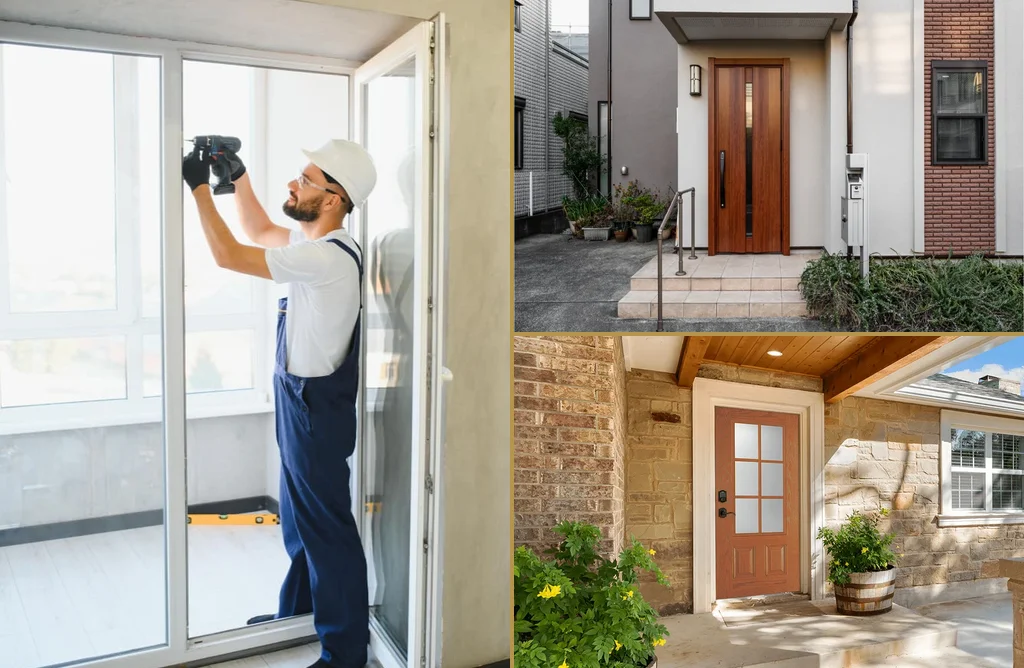
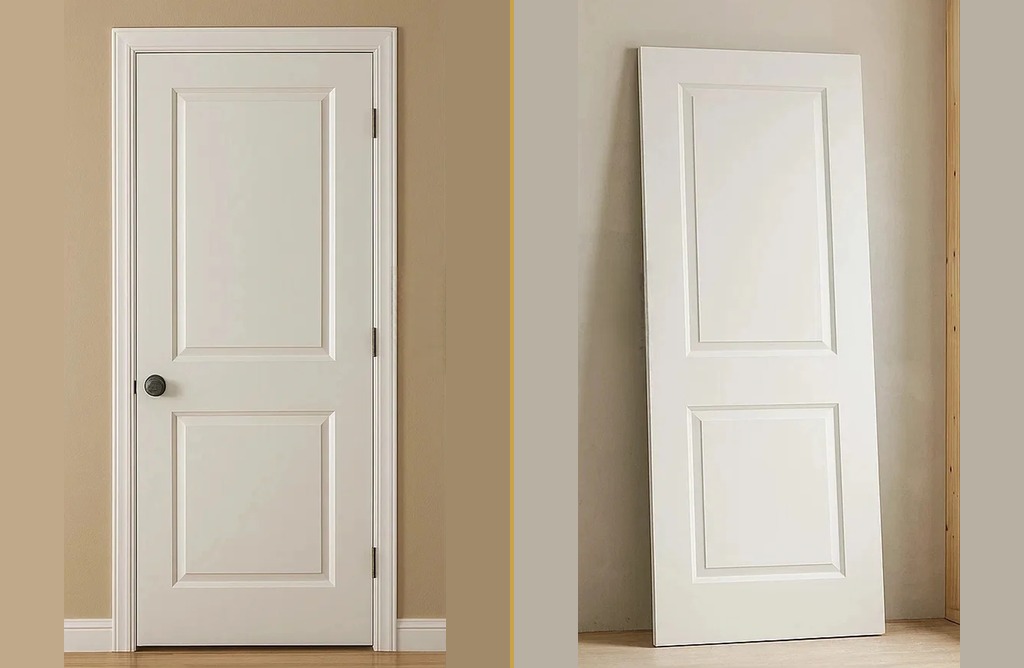
In pre-hung vs slab door terms, a pre-hung door is a complete door unit. The door hangs on hinges inside a frame made of two side jambs and a head jamb. Exterior units also include a threshold and weatherstripping. Most units ship with the hinges already attached, and many come pre-drilled for the lockset and latch. You still buy the handle and deadbolt separately.
Because the maker builds the door and frame as a matched set, the gaps around the door stay even from the start. That is a big reason builders and installers like them.
Pre-hung doors come in two main groups:
- Interior pre-hung doors: Usually 1 3/8 inches thick, in hollow-core, solid-core, or solid wood.
- Exterior pre-hung doors: Usually 1 3/4 inches thick, in steel, fiberglass, or wood, with a threshold and seals.
What Is a Slab Door?
Pre-hung vs slab door starts with one simple fact: a slab door is only the door. It has no frame, no hinges, and often no holes for the lock. You hang it on your existing frame, which means you must cut hinge spaces and drill the lock holes yourself or pay a carpenter to do it.
In a pre-hung vs slab door decision, slab doors work best when you want a new look without touching the walls or trim. You can swap a dated panel door for a clean look with shaker doors, a smooth finish with molded doors, or a modern style with grooved doors and leave the frame in place.
Pre-Hung vs Slab Door Cost
Price is the first thing most buyers compare in a pre-hung vs slab door decision. A slab door costs less because you buy less. A pre-hung door includes a frame and hinges, so the sticker price runs higher. Labor narrows the gap, because a slab needs hand fitting, so look at both tables.
Approximate door cost (USD, door only)
| Door Type | Pre-Hung | Slab |
|---|---|---|
| Hollow-core interior | $70 to $200 | $30 to $100 |
| Solid-core interior | $150 to $400 | $80 to $300 |
| Solid wood interior | $300 to $800+ | $150 to $600 |
| Exterior steel or fiberglass | $300 to $2,500 | $200 to $1,500 |
Exterior slabs are less common. Most suppliers sell exterior doors as pre-hung units, so the exterior slab range is only a rough guide.
Approximate labor cost (USD)
| Job | Typical Labor |
|---|---|
| Install an interior pre-hung door | $150 to $500 |
| Hang an interior slab door in an existing frame | $150 to $400 |
| Install an exterior pre-hung door | $300 to $1,000 |
| Repair a damaged frame or jamb | $150 to $600 |
These labor figures are approximate, and local rates can run higher or lower.
Which Option Costs Less Overall?
The answer depends on the job. Use this table to see where each side of the pre-hung vs slab door pair saves money.
| Situation | Usually Cheaper | Why |
|---|---|---|
| Frame is straight and solid | Slab door | You skip the frame and the trim work |
| Frame is damaged or out of square | Pre-hung door | A slab would need frame repair first |
| New wall or new opening | Pre-hung door | There is no frame to reuse |
| Exterior door | Pre-hung door | The frame, threshold, and seals come together |
| Several doors in one remodel | Pre-hung door | Faster installation can lower labor |
Do not forget the extras that change your pre-hung vs slab door budget. Both options need a handle set, and both may need paint or stain. A pre-hung door can also need new trim and drywall touch-ups after the old frame comes out.
Pre-Hung vs Slab Door Installation: What to Expect
Installation is where the pre-hung vs slab door choice gets real. A pro can often finish either job in one to three hours. If you have never hung a door, plan for a full afternoon.
Installing a Pre-Hung Door
- Remove the old door. Take off the door, the trim, and the old frame if you are replacing the frame.
- Check the opening. Make sure the rough opening is plumb and the floor is level.
- Set the unit in place. Slide the new unit into the opening and shim behind the hinges.
- Plumb and fasten. Use a level, then nail through the jambs and shims.
- Check the gaps. The door should swing freely and close without rubbing.
- Finish up. Trim the shims, add casing, fill the nail holes, and install the handle and lock.
Installing a Slab Door
- Measure the old door. Record the width, height, thickness, and hinge locations.
- Remove the old door. Save the hinges if they are in good shape.
- Fit the slab. Test the new door in the frame and trim the edges only if needed.
- Cut the hinge spaces. Use a chisel or a router with a hinge template.
- Drill the lock holes. Use a hole saw and a drilling guide for clean, straight holes.
- Hang and finish. Hang the door, adjust the fit, and seal all six sides, including the top and bottom edges.
Tools matter here. A pre-hung install needs a level, shims, a drill, and a saw. A slab install adds chisels or a router, a hinge template, and a hole saw. Many first-timers find the pre-hung vs slab door gap in skill level bigger than the gap in price.
When to Choose a Pre-Hung Door
In the pre-hung vs slab door choice, a pre-hung door is the better buy in these cases:
- The frame is damaged. Warped, cracked, or rotted jambs will keep the new door from fitting.
- The frame is out of square. A crooked frame makes a slab rub, stick, or leave gaps.
- You are adding a new opening. New walls have no frame, so you need a complete unit.
- You are replacing an exterior door. You need a tight seal against air, water, and weather.
- You want a faster install. The door and frame arrive matched, which cuts the fitting work.
When to Choose a Slab Door
In the pre-hung vs slab door choice, a slab door is the better buy in these cases:
- The frame is in great shape. It is straight, solid, and square, so keeping it makes sense.
- You want to save money. You skip the frame cost and often avoid new trim.
- You want to keep your trim and walls. You leave the casing and drywall alone.
- You are updating the style only. You want a new design in the same size and swing.
- You have the skills and tools. You can mortise hinges and drill lock holes accurately.
Exterior Doors: Why Pre-Hung Usually Wins
Exterior doors face rain, wind, and cold, so the frame, threshold, and seals matter as much as the door itself. That is why most exterior doors come as pre-hung units. In the pre-hung vs slab door debate, pre-hung nearly always wins outside.
If you are planning a new entry, read our front door replacement cost guide for current price ranges. Our guide on how to choose exterior doors covers materials, security, and style. For a paint-ready surface, look at smooth fiberglass doors, or choose a wood look such as oak grain, mahogany grain, or fir grain. For a contemporary home, see our guide to modern exterior doors. You can also browse all of our exterior doors in one place.
Interior Doors: Where a Slab Door Makes Sense
Interior frames often last for decades, so a slab door wins the pre-hung vs slab door choice in many remodels. If your frame is straight and solid, a slab lets you refresh a room at a lower cost. Start with our interior door guide to compare styles and materials. Our list of interior door types shows which designs suit each room. You can also browse our full range of interior doors.
Be careful with fire safety. Fire-rated doors work as part of a tested assembly that includes the frame and hardware. For a fire-rated opening, check your local code and buy a rated unit instead of mixing parts on your own.
How to Measure for Each Door
Wrong measurements are the top reason doors get returned. Measure with care before you order, because a wrong size can sink either side of the pre-hung vs slab door choice.
| What to Measure | Slab Door | Pre-Hung Door |
|---|---|---|
| Width, height, and thickness | Measure the old door itself | Measure the old door, then confirm the opening |
| Rough opening | Not needed | Usually 2 inches wider and 2 1/2 inches taller than the door |
| Hinge locations | Measure from the top of the door to each hinge | Included in the unit |
| Lock holes | Measure the backset and the hole size | Check whether the unit comes pre-drilled |
| Jamb width | Not needed | Match your wall thickness; 4 9/16 inches suits a standard 2×4 wall |
| Swing direction | Match the current swing | Choose left-hand or right-hand to match the opening |
Thickness also matters. Most interior doors are 1 3/8 inches thick, and most exterior doors are 1 3/4 inches thick. A mismatch will not fit your hinges or your hardware.
Pre-Hung vs Slab Door: Pros and Cons
Use these lists to weigh pre-hung vs slab door side by side.
Pre-Hung Door Pros
- Door and frame arrive matched, so gaps stay even
- Hinges come attached, and many units come pre-drilled
- Best choice for exterior doors and new openings
- A good fix for a damaged or crooked frame
Pre-Hung Door Cons
- Higher upfront price
- Heavier and harder to handle alone
- Often means removing trim and repairing drywall
- Needs careful shimming to sit plumb
Slab Door Pros
- Lower price
- Keeps your existing frame and trim
- Easy to swap for a new style
- Good for a quick, low-cost refresh
Slab Door Cons
- Needs exact measuring and trimming
- Hinge spaces and lock holes require skill and tools
- Not a fix for a bad frame
- Rarely suits exterior doors
How to Choose Between a Pre-Hung vs Slab Door
Follow these five steps to settle the pre-hung vs slab door question for your project.
- Inspect the frame. Check that it is straight, solid, and square. If not, choose pre-hung.
- Decide on interior or exterior. For exterior, choose pre-hung.
- Compare total cost. Add the door, labor, hardware, trim, and finishing for each option.
- Be honest about your skills. Hinge cutting and lock drilling need patience and the right tools.
- Think about the schedule. Pre-hung units can install faster when you replace several doors at once.
Common Mistakes to Avoid
These mistakes trip up many homeowners who weigh pre-hung vs slab door.
Choosing a slab for a bad frame. A new slab in a warped frame will rub and leave gaps. Fix the frame or buy a pre-hung unit.
Measuring the frame instead of the door. For a slab, measure the door itself. For a pre-hung unit, measure the rough opening.
Ignoring the thickness. A 1 3/8 inch door will not fit a frame cut for a 1 3/4 inch door.
Forgetting the swing direction. Check the hinge side and the way the door opens before you order.
Skipping the edges. Seal the top and bottom edges of a slab. Moisture can swell the wood and cause sticking.
Final Verdict: Pre-Hung vs Slab Door
The pre-hung vs slab door choice comes down to your frame, your budget, and your skills.
Choose a pre-hung door if the frame is damaged, the opening is new, the door is exterior, or you want a faster, more reliable fit.
Choose a slab door if your frame is straight and solid, you want to keep your trim, and you can fit hinges and locks accurately or hire someone who can.
Use both if your remodel includes several rooms. Keep good frames and fit slabs there, then use pre-hung units for damaged frames and new openings.
Whichever way you lean, a good pre-hung vs slab door choice starts with an honest look at your frame.
Frequently Asked Questions
What is the main difference between a pre-hung door and a slab door?
A pre-hung door comes in its own frame with hinges attached, and many units are pre-drilled for a lockset. A slab door is only the door panel, with no frame, hinges, or lock holes. You must fit a slab to your existing frame.
How big is the cost gap in pre-hung vs slab door pricing?
A slab door costs less up front. Interior slabs often run about $30 to $600, while interior pre-hung doors run about $70 to $800 or more. Labor and frame repair can shrink that gap, and prices vary by location, so compare the total cost.
Which door is easier to install in the pre-hung vs slab door comparison?
Pre-hung doors are easier to get square, because the door and frame arrive matched. They are heavy, though, and need careful shimming. A slab door needs exact trimming, hinge cutting, and lock drilling, which takes more skill.
When should I choose a pre-hung door?
Choose a pre-hung door when your frame is damaged or out of square, when you are adding a new opening, or when you are replacing an exterior door. It also saves time when you replace several doors at once.
When is a slab door the better choice?
A slab door is better when your current frame is straight, solid, and square. It saves money and lets you keep your trim and walls. It works best when you only want a new style in the same size.
Are exterior doors usually pre-hung or slab?
For exterior doors, the pre-hung vs slab door answer is almost always pre-hung. The frame, threshold, and weatherstripping come together, which gives a tight seal against air and water. A slab alone rarely gives the same result.
Can I replace a pre-hung door with a slab door?
Yes, if the existing frame is square and in good shape. You must match the size, thickness, and hinge locations, and you may need to trim the slab to fit. If the frame is damaged, replace the whole unit.
Do pre-hung doors include the handle and lock?
Usually not. A pre-hung door includes the frame and hinges, and many units are pre-drilled for the latch. You still buy the handle, deadbolt, and other hardware separately.
How do I measure for a slab door?
Measure the width, height, and thickness of the old door, not the frame opening. Then measure from the top of the door to each hinge, and note the lock hole size and backset. Write every number down before you order.
Can I trim a slab door to fit?
Yes, but only a small amount. Most manufacturers limit trimming, and hollow-core doors have little room before you reach the core. Check the maker’s guidance before you cut.
Ready to Choose Your Door?
Still weighing pre-hung vs slab door for your home? Carlton Doors helps homeowners and builders across the USA and Canada choose the right door for their style, frame, and budget. Tell us about your project, and our team will point you toward the best fit.
Get in touch for product availability, accurate pricing, and guidance on your door project. Browse our doors, learn about our services, or look through our portfolio for real project ideas.
Contact Carlton Doors
USA:
Phone: +1 (562) 545-1118
Email: info@carltondoors.com
Address: 16448 Manning Way, Cerritos, CA 90703
Canada:
Phone: +1 (437) 238-9088
Address: 2425 Meadowpine Blvd, Unit 2, Mississauga, ON L5N 6L7
Disclaimer: This article is for informational purposes only. Door styles, pricing, and availability vary by region and supplier. All prices are estimated ranges and may change. Carlton Doors recommends consulting a professional before you make a final purchase.