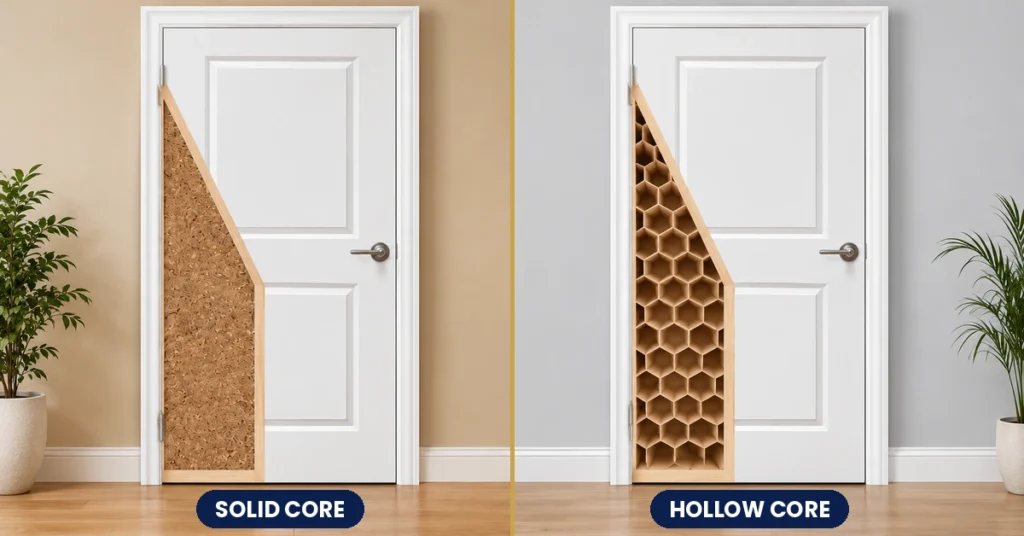
The solid core vs hollow core doors decision affects more than your budget. It changes how quiet your rooms feel, how well your doors hold up to daily use, and how solid they feel every time you open or close them. However, from the outside, the two can look almost the same. Instead, the difference is hidden inside.
This guide explains what each door is made of, how they compare on cost, noise, and durability, and which rooms suit each type. You will also find price ranges, a quick way to tell which door you already have, and the mistakes homeowners make when they choose.
Solid Core vs Hollow Core Doors: Quick Answer
So, if you want the short version, here it is.
- Choose solid core doors for bedrooms, home offices, bathrooms, and any room where privacy, sound control, or a heavier, more premium feel matters.
- Choose hollow core doors for closets, pantries, laundry rooms, and low-traffic spaces where budget matters more than noise control.
- Use both in the same home. Many homeowners put solid core doors where people sleep and work, and hollow core doors where they store things.
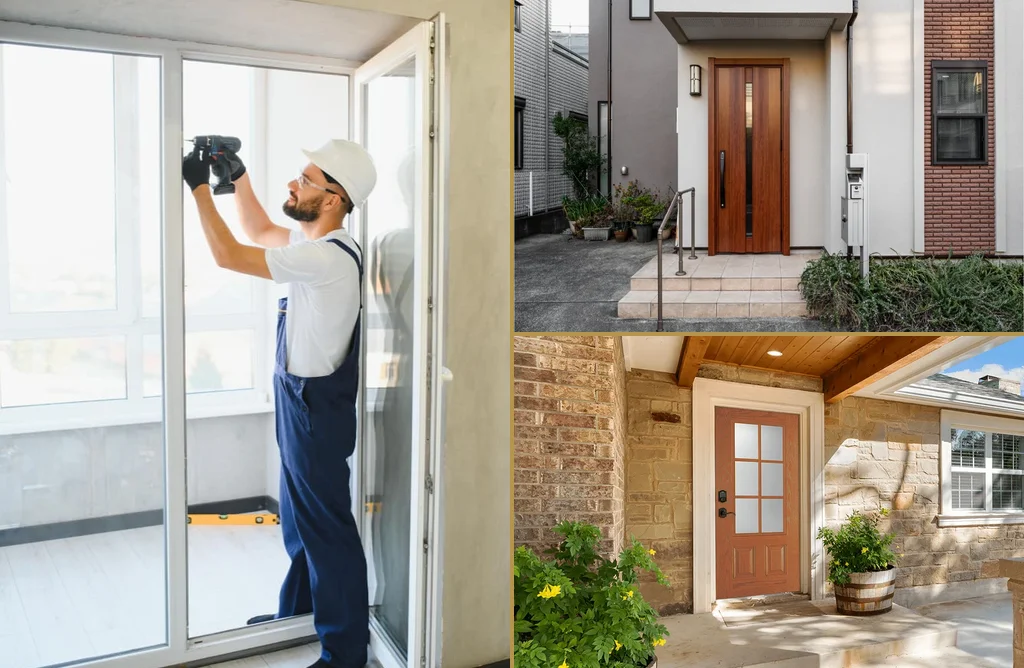
However, neither type works as a main exterior door. Entry doors need an insulated, weather-sealed unit such as fiberglass or steel.
What Is a Solid Core Door?
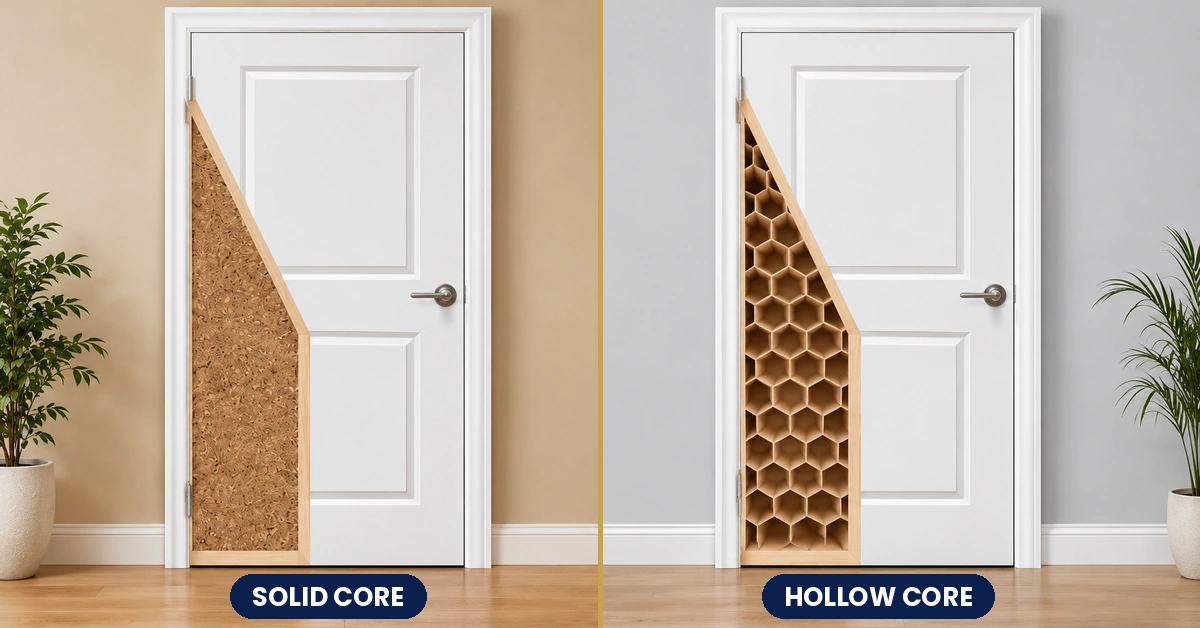
A solid core door has a dense, engineered center, usually made from particleboard, medium-density fiberboard (MDF), or a wood composite. Then, a wood veneer, MDF, or molded skin covers the core on both faces, while a wood frame wraps the edges.
Because the core fills the whole door, a solid core door feels heavy and sturdy. It blocks more sound than a hollow core door, resists dents better, and closes with a quiet, solid sound. It also costs less than a door made of solid wood, and many builders offer solid core doors as an upgrade.
Do not confuse the two terms:
- Solid core: An engineered composite center with a veneer or molded face.
- Solid wood: Real wood all the way through. It looks and feels premium, but it costs more and can move with changes in humidity.
What Is a Hollow Core Door?
A hollow core door has a light wood frame around the edges and a mostly empty center. A cardboard honeycomb grid fills the space inside and supports the two thin skins on the faces. Generally, the skins are hardboard, MDF, or a thin wood veneer.
As a result, this build keeps the door light and affordable. Hollow core doors are easy to carry, easy to hang, and common in new construction because they keep costs down across a whole house. The trade-off is less sound control, less impact resistance, and a lighter feel when you use them.
Some suppliers also offer a middle option called a semi-solid or foam-core door. It uses a hollow core build filled with foam, which improves sound control a little while keeping the weight down.
Solid Core vs Hollow Core Doors: Key Differences
This table shows how the two door types compare at a glance.
| Feature | Solid Core Door | Hollow Core Door |
|---|---|---|
| Core material | Particleboard, MDF, or wood composite | Cardboard honeycomb inside a wood frame |
| Weight | Heavy | Light |
| Sound control | Good | Low |
| Durability | Resists dents and impact | Dents and punctures more easily |
| Feel | Sturdy, closes with a solid sound | Light, can feel hollow |
| Cost | Higher | Lower |
| Installation | Heavier to handle, needs strong hinges | Easy to carry and hang |
| Trimming | Can be trimmed more | Only a small amount |
| Best for | Bedrooms, offices, bathrooms | Closets, pantries, laundry rooms |
Noise and Privacy: Which Door Blocks More Sound?
Sound control is one of the main reasons homeowners upgrade to solid core doors. The dense core absorbs and blocks more noise, so voices, TV sound, and footsteps travel less from room to room.
Compared with solid core doors, hollow core doors let more sound pass through because the thin skins and open core vibrate easily.
Still, keep this in mind: the door is only part of the picture. Gaps around the door let sound leak through even when the door itself is solid. For better results:
- Keep the gaps around the door even and tight
- Add weatherstripping or a door sweep to rooms where quiet matters most
- Pair a solid core door with a well-fitted frame
For example, in home offices, nurseries, media rooms, and bedrooms next to living areas, a solid core door makes a noticeable difference.
Durability: Which Door Lasts Longer?
In daily use, solid core doors handle wear better than hollow core doors. The dense core resists dents from kids, pets, vacuum cleaners, and furniture moves. Screws for hinges and handles also hold better in a solid core, so hardware is less likely to loosen over time.
Hollow core doors, on the other hand, are more fragile. A hard knock can dent or punch a hole through the thin skin, and repairs rarely look perfect. Hollow core doors can last for many years in a closet or pantry, but in a busy hallway or a child’s room, they tend to show damage sooner.
Neither type suits a damp spot without care. Seal all six sides of any door, including the top and bottom edges, so moisture does not swell the skin or the core.
Solid Core vs Hollow Core Doors: Cost Comparison 2026
However, price is where hollow core doors beat solid core doors. The ranges below are estimated USA prices for standard interior doors, so treat them as a guide. Actual cost depends on size, style, finish, brand, and region. Contact Carlton Doors for accurate pricing on your project.
| Door Type | Estimated Slab Price (USD) | Estimated Pre-Hung Price (USD) |
|---|---|---|
| Hollow core, flush or molded | $40 to $150 | $80 to $250 |
| Solid core, flush or molded | $100 to $350 | $180 to $500 |
| Solid core, wood veneer or premium style | $250 to $600+ | $350 to $800+ |
Installation labor for an interior door often runs about $150 to $500 per door in the USA, depending on the job and your area. Solid core doors can cost a little more to install because of the extra weight, especially when the installer needs a helper or stronger hinges.
Upgrading every door in the house to solid core adds up quickly, so many homeowners upgrade only the doors where noise and privacy matter most.
Canadian buyers will find similar options, but prices vary by province and supplier, so ask for a local quote.
Weight and Installation
Weight is one of the clearest differences between solid core and hollow core doors, and it affects how you install and use them.
| Factor | Solid Core Door | Hollow Core Door |
|---|---|---|
| Typical feel when carrying | Heavy, often needs two people | Light, one person can carry it |
| Hinges | Three hinges recommended | Two or three hinges |
| Frame | Needs a solid, square frame | Works with most frames |
| DIY friendly | Harder | Easier |
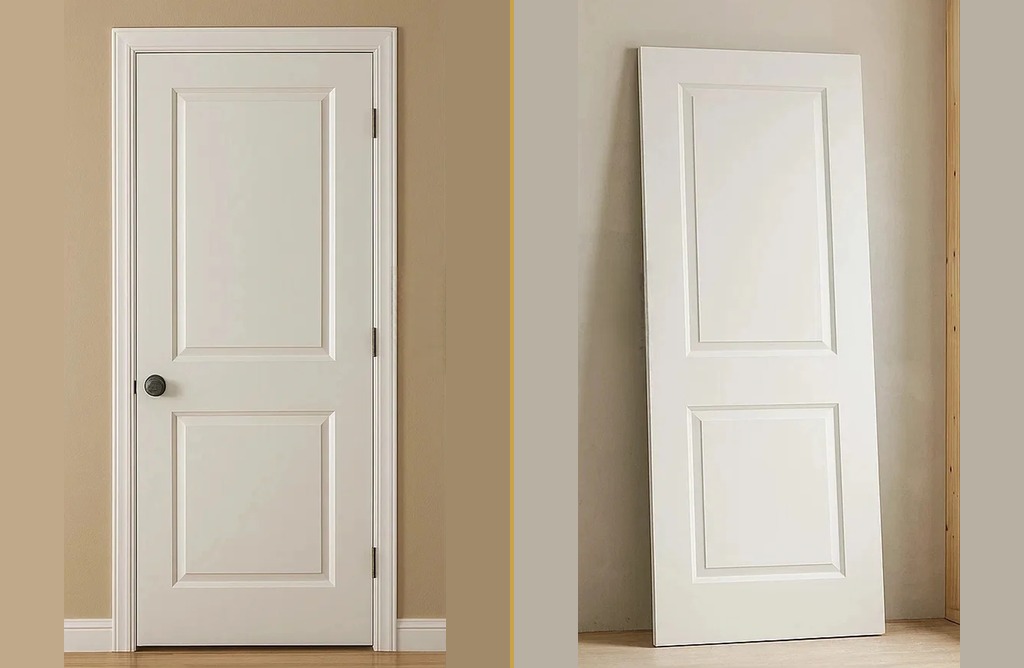
Because of this, a heavy solid core door puts more strain on the hinges and the frame. Use three good-quality hinges, and check that the frame is plumb and square before you hang it. Also, if your frame is damaged, a pre-hung unit is often the better choice. Our guide on pre-hung vs slab doors explains how to decide.
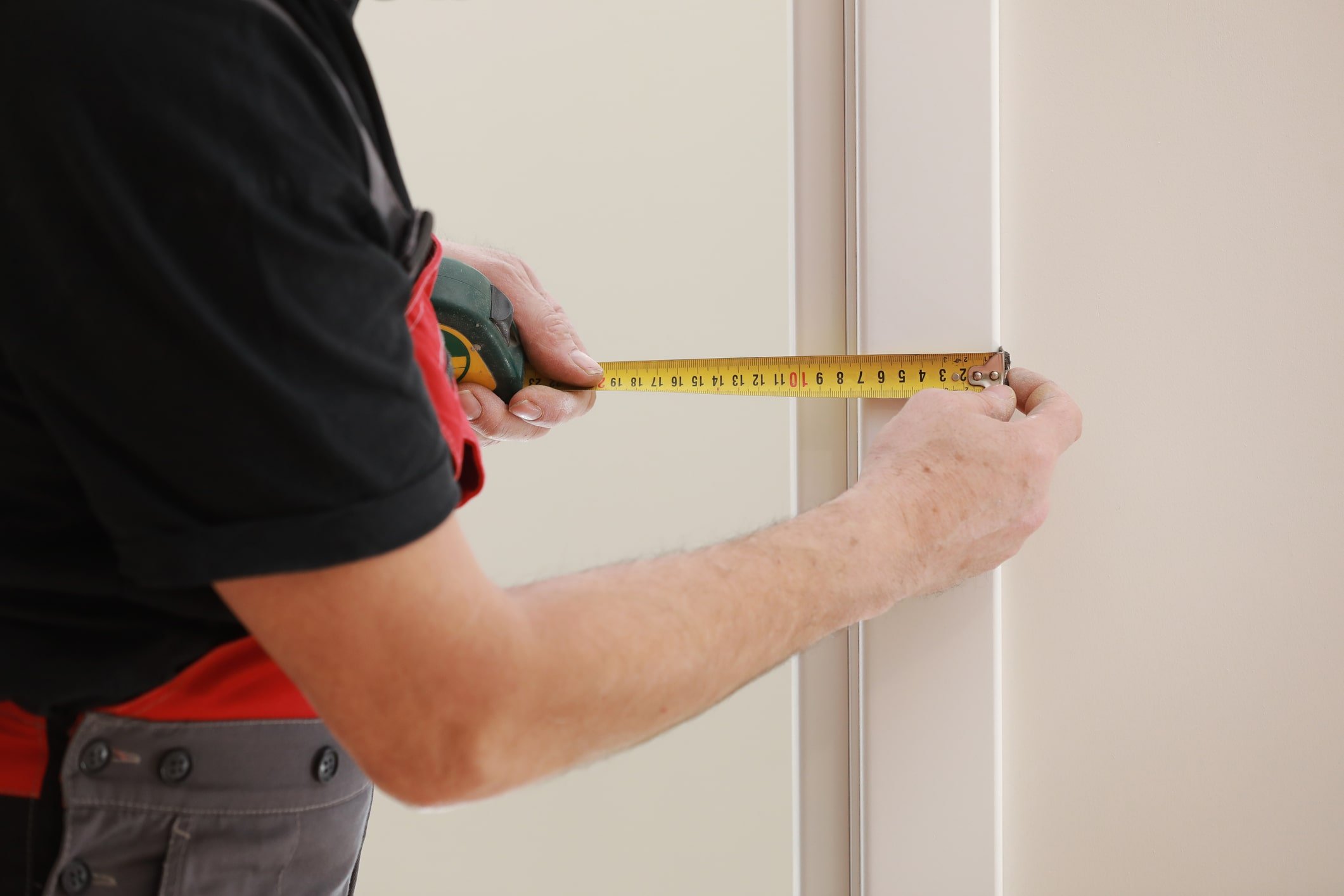
Before you order either type, take careful measurements. Our step-by-step guide shows how to measure a door for a slab or a pre-hung unit.
Fire Safety and Building Codes
Many local codes in the USA follow the International Residential Code (IRC). For a door between an attached garage and the house, the IRC calls for a solid wood door, a solid or honeycomb-core steel door at least 1 3/8 inches thick, or a 20-minute fire-rated door. However, a standard hollow core wood door does not meet that requirement.
A solid core door also slows fire better than a hollow core door, but solid core does not automatically mean fire-rated. Instead, a rated door carries a label and works as part of a tested assembly that includes the frame and hardware. If an opening needs a rating, buy a labeled unit and check your local code. Our guide to fire-rated doors covers ratings and where they apply. Similarly, Canadian buyers should check the local building code in their province.
Which Rooms Suit Each Door Type?
Use this room-by-room guide to plan your solid core vs hollow core doors choices across the whole house.
| Room | Best Choice | Why |
|---|---|---|
| Primary bedroom | Solid core | Privacy and better sleep |
| Kids’ bedrooms | Solid core | Handles rough use and blocks noise |
| Home office | Solid core | Quiet for calls and focus |
| Bathroom | Solid core | Privacy and sound control |
| Nursery | Solid core | Keeps household noise out |
| Media room | Solid core | Keeps sound in |
| Closets | Hollow core | Low traffic, privacy not needed |
| Pantry | Hollow core | Light use, saves money |
| Laundry room | Hollow core or solid core | Solid core if the machines are noisy |
| Garage entry | Fire-rated or code-approved door | Check your local code |
Solid Core vs Hollow Core Doors: Pros and Cons
Pros of Solid Core Doors
- Better sound control and privacy
- Resists dents and daily wear
- Feels heavy and premium
- Holds hinges and hardware screws well
- Costs less than solid wood
Cons of Solid Core Doors
- Higher price per door
- Heavy to carry and install
- Needs strong hinges and a square frame
Hollow Core Door Pros
- Lowest price
- Light and easy to install
- Good choice for closets and storage spaces
- Easy to replace
Hollow Core Door Cons
- Lets more sound through
- Dents and punctures easily
- Hard to repair neatly
- Only a little room for trimming
- Can feel light or cheap in busy rooms
How to Tell If You Have a Solid Core or Hollow Core Door
Not sure whether your home has solid core or hollow core doors? Try these quick checks.
- Knock on the door. A hollow core door sounds hollow and echoes. A solid core door, however, sounds dull and firm.
- Feel the weight. Swing the door slowly. A solid core door feels heavy, so it moves with more momentum.
How to Choose Between Solid Core vs Hollow Core Doors
Follow these steps to choose the right door for each opening.
- List every door in your project. Write down each room and how you use it.
- Mark the rooms that need quiet or privacy. For example, bedrooms, offices, and bathrooms usually top the list.
- Set your budget. Decide how many solid core doors you can afford, then use hollow core doors for the rest.
- Pick your style. Popular options include shaker doors, molded doors, and flat and grooved doors for modern homes.
- Check the frame and the code. Confirm the frame can carry the weight, and check code rules for any garage or fire-rated opening.
For more help comparing designs, read our interior doors guide and our list of interior door types. You can also browse our full range of interior doors.
Common Mistakes When Choosing Solid Core vs Hollow Core Doors
Using hollow core doors on bedrooms and offices. It saves money at first, but noise travels easily through a hollow core door in rooms where privacy matters.
Upgrading every door to solid core. However, closets and pantries rarely need it. Spend the money where you will notice the difference.
Expecting the door alone to stop all sound. Gaps around the door let noise through, so seal them for real results.
Using a hollow core door for the garage entry. In fact, many codes do not allow it. Check your local rules first.
Hanging a heavy door on weak hinges. A solid core door needs three strong hinges and a solid frame.
Trimming a hollow core door too much. If you cut too far, then you reach the hollow center. Check the maker’s trimming limit before you cut.
Using an interior door outside. After all, neither type is built for weather. Choose an exterior door built for your climate. Our tips on how to choose exterior doors can help, and smooth fiberglass doors are a popular low-maintenance choice.
Final Verdict: Solid Core vs Hollow Core Doors
The solid core vs hollow core doors choice comes down to noise, use, and budget.
Choose solid core doors for bedrooms, offices, bathrooms, and busy rooms where privacy, sound control, and durability matter.
Choose hollow core doors for closets, pantries, and storage spaces where light use and a lower price make more sense.
Finally, mix both for the best value. Put your budget into the doors you use and hear every day, and save money on the rest. Then, once your new doors are in, fresh trim and mouldings give each opening a finished look.
Frequently Asked Questions
What is the main difference between solid core vs hollow core doors?
A solid core door has a dense center of particleboard, MDF, or wood composite. Meanwhile, a hollow core door has a light frame and a cardboard honeycomb center. Solid core doors are heavier, quieter, and more durable, while hollow core doors cost less.
Are solid core doors worth the extra cost?
For bedrooms, home offices, and bathrooms, yes for most homeowners. They block more sound, resist dents, and feel more solid. However, for closets and pantries, a hollow core door is usually enough.
Do solid core doors block sound?
They block noticeably more sound than hollow core doors. The door alone will not make a room soundproof, though. Seal the gaps around the door with weatherstripping and a door sweep for the best results.
How much more do solid core doors cost than hollow core doors?
In the solid core vs hollow core doors price comparison, a hollow core slab often costs about $40 to $150, while a solid core slab often costs about $100 to $350 or more. Prices vary by style, size, and region.
Can I use a hollow core door for an exterior door?
No. Hollow core doors are not built for weather, security, or insulation. Use an insulated exterior door, such as fiberglass or steel, for any entry door.
Is a solid core door the same as a solid wood door?
No. A solid core door has an engineered composite center with a veneer or molded face. However, a solid wood door is real wood all the way through and usually costs more.
Can I replace a hollow core door with a solid core door?
Yes, in most cases. Match the size, thickness, and hinge locations, and make sure the frame is solid and square. Use three strong hinges to carry the extra weight.
Are solid core doors fire-rated?
Not automatically. A solid core door slows fire better than a hollow core door, but a fire-rated door must carry a label and be installed as a tested assembly. Check your local code for garage and other rated openings.
How heavy is a solid core door compared to a hollow core door?
A solid core door is often about twice as heavy as a hollow core door of the same size. Still, exact weight depends on the size, core material, and style.
How can I tell if my door is solid core or hollow core?
Knock on it. A hollow core door sounds hollow, while a solid core door sounds dull and firm. A solid core door also feels much heavier when you swing it.
Ready to Choose Your Interior Doors?
Still weighing solid core vs hollow core doors for your home? Carlton Doors helps homeowners, builders, and designers across the USA and Canada choose the right door for every room, style, and budget. Tell us about your project, and our team will point you toward the best fit.
Get in touch for product availability, accurate pricing, and guidance on your door project
Contact Carlton Doors
USA:
Phone: +1 (562) 545-1118
Email: info@carltondoors.com
Address: 16448 Manning Way, Cerritos, CA 90703
Canada:
Phone: +1 (437) 238-9088
Address: 2425 Meadowpine Blvd, Unit 2, Mississauga, ON L5N 6L7
Disclaimer: This article is for informational purposes only. Door styles, pricing, and availability vary by region and supplier. All prices are estimated ranges and may change. Building code requirements vary by location, so check with your local building department or a professional before you make a final purchase.